

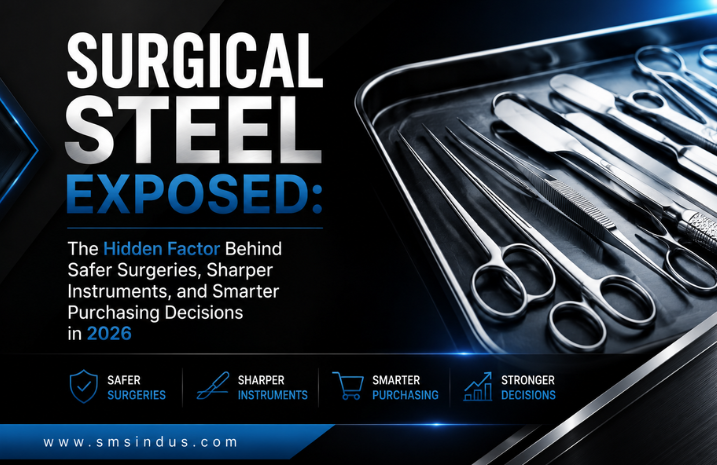
In short: “surgical steel” is not a single grade. It is an informal name for stainless steels used in medical devices. Cutting and gripping instruments such as scissors, forceps and needle holders are normally made from hardenable 400-series martensitic steels (for example 410 and 420 types). Austenitic 300-series steels such as 304 and 316L cannot be hardened in the same way; they are used for hollowware, some non-cutting instruments and, in the case of 316L, many implants.
This article explains the main grades. For practical care of stainless steel instruments, see why stainless steel surgical instruments matter; for grade selection in scissors specifically, see why stainless steel grade matters in surgical scissors.
What “surgical steel” means
Stainless steels are iron alloys with at least about 10.5% chromium, which forms a protective oxide layer. Different additions of carbon, nickel and molybdenum give different properties. Standards such as ISO 7153-1 and ASTM F899 list stainless steels used for surgical instruments.
300-series (austenitic) stainless steels
- 304: chromium-nickel steel with good corrosion resistance, widely used for bowls, trays, kidney dishes and other hollowware.
- 316L: similar, with added molybdenum for better resistance to chloride pitting and low carbon. It is widely used for implants and some instrument components.
Austenitic steels cannot be hardened by heat treatment, so they are not used for instruments that must hold a sharp edge.
400-series (martensitic) stainless steels
- 410 and similar grades: hardenable steels used for many forceps, clamps and needle holders.
- 420 and similar grades: higher carbon content allows greater hardness; used for scissors, knives and other cutting instruments.
Martensitic steels trade some corrosion resistance for hardness, which is why cleaning, drying and passivation are important for these instruments.
Forging, heat treatment and finishing
The grade is only part of the picture. Most reusable instruments are forged, then heat-treated to the required hardness, ground, assembled, finished and passivated. Heat treatment that is too hard can make an instrument brittle; too soft, and edges and jaws wear quickly. Good grinding and joint setting determine how smoothly scissors cut and how well jaws meet.
What buyers can ask
- Which material is the instrument made from, and which standard does it refer to?
- Are the instructions for use supplied, including cleaning and sterilisation guidance?
- For cutting and gripping instruments, would a tungsten carbide version suit high-use patterns better? See the stainless steel vs tungsten carbide buyer’s guide.
Where to find these instruments
Browse stainless steel surgical instruments, surgical scissors and stainless steel hollow ware from NAZMED SMS.
Frequently asked questions
Is 316L used for surgical scissors?
Generally no. 316L cannot be hardened to hold a sharp cutting edge, so scissors and other cutting instruments are normally made from hardenable martensitic grades such as 420 types.
What is the difference between 304 and 316L stainless steel?
Both are austenitic. 316L contains added molybdenum and less carbon, giving it better resistance to chloride pitting, which is why it is widely used for implants.
Is “surgical steel” a specific grade?
No. It is an informal term for stainless steels used in medical devices. Ask which grade or standard an instrument is made to.
Questions about instrument materials?
Browse the product ranges above or contact NAZMED SMS in Subang Jaya, Selangor, for a quotation: sales@smsindus.com or +60 3-8024 4401.