
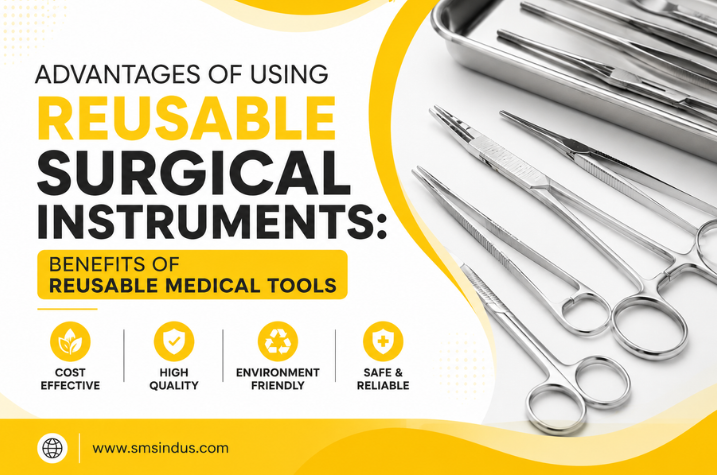
Every hospital administrator, procurement officer, and surgeon eventually asks the same expensive question: should we keep buying single-use instruments, or is it time to switch back to Reusable Surgical Instruments that are engineered to survive hundreds of sterilization cycles without losing precision? In 2026, the answer is no longer a matter of opinion. It is a matter of cost, safety, sustainability, and reputation. Hospitals across Malaysia and the wider region are quietly rebuilding their surgical supply chains around Quality Instruments that can be cleaned, sterilized, and reused again and again, and the facilities that make this shift first are the ones winning tenders, reducing surgical site infections, and cutting waste disposal bills that used to eat silently into their annual budgets. This is not a small trend. It is a full transformation of how operating theatres, dental clinics, and specialty surgical centers think about Medical Products Malaysia wide, and it is happening right now while many procurement teams are still stuck signing repeat purchase orders for disposable kits that get thrown away after a single use.
This article is written for two kinds of readers. The first is the hospital buyer, clinic owner, or dental practice manager who wants to understand exactly why Reusable Surgical Instruments outperform single-use alternatives on every meaningful metric, from lifecycle cost to patient outcomes. The second is the reader who already knows they want to switch and is now searching for a trustworthy Malaysian supplier that can deliver Surgical Medical Supplies at scale, on schedule, with proper certification. If you fall into either category, you are in the right place, and by the end of this article you will know exactly how to reduce surgical risks with quality instruments, what questions to ask your supplier, and why NAZMED SMS SDN BHD, operating under the trusted SMS Brand, has become one of the names procurement teams search for when they need SMS Surgical Instruments they can actually rely on in the operating theatre.
The Real Story Behind Reusable Surgical Instruments
Reusable Surgical Instruments are precision tools made from surgical-grade stainless steel, titanium, or other corrosion-resistant alloys, designed specifically to withstand repeated cycles of cleaning, disinfection, and steam or low-temperature sterilization without degrading in sharpness, strength, or function. Unlike single-use disposable instruments, which are manufactured cheaply, used once, and discarded into biohazard waste streams, reusable instruments are built with a completely different philosophy. They are engineered for durability first. A well-made pair of reusable surgical scissors, a needle holder, forceps, or a retractor is expected to survive hundreds, sometimes thousands, of sterilization cycles while maintaining the exact tolerances a surgeon depends on during a delicate procedure. This durability is not accidental. It comes from the metallurgy, the heat treatment process, the finishing techniques, and the quality control standards applied during manufacturing, and it is precisely why hospitals that invest in genuinely Quality Instruments end up spending less over time, not more, even though the upfront unit price of a reusable instrument is higher than a disposable one.
The confusion many buyers fall into is comparing sticker price instead of comparing total cost of ownership. A single disposable surgical instrument might cost a fraction of what a reusable equivalent costs, but that disposable instrument is thrown away after one procedure. A reusable instrument, by contrast, might be used in three hundred, five hundred, or even a thousand procedures over its working life if it is properly maintained and reprocessed. When you divide the purchase price of a quality reusable instrument by the number of procedures it will realistically support, the per-use cost drops dramatically below that of any single-use alternative, and this is before you even factor in the cost of waste disposal, storage space, reordering logistics, and the environmental impact of constantly manufacturing and shipping new disposable units. This is the calculation that is quietly reshaping procurement strategy at hospitals, day surgery centers, and dental clinics throughout Malaysia and the broader Southeast Asian region heading into 2026.
How Reusable Surgical Instruments Directly Reduce Surgical Risks
One of the most persuasive reasons hospitals are returning to reusable instrumentation is patient safety, and specifically, how to reduce surgical risks with quality instruments that are properly designed, properly sterilized, and properly maintained. There is a common misconception that disposable equals safer because it is used only once, but this assumption falls apart under scrutiny. Many disposable instruments are manufactured to lower tolerances because they are not expected to be reused, which means their cutting edges can be less consistent, their locking mechanisms less reliable, and their overall build quality more variable from batch to batch. A surgeon working with an inconsistent tool is working with an added variable of risk during a procedure where every millimeter and every second matters. Reusable Surgical Instruments, when sourced from a reputable manufacturer and maintained through a validated sterilization protocol, deliver a level of consistency that disposable tools frequently cannot match, because each reusable instrument is inspected, reconditioned, and tested before it re-enters circulation.
Sterilization technology has also advanced significantly, and this is one of the biggest stories in operating theatre management heading into 2026. Modern central sterile supply departments increasingly use tracking systems, some enabled by RFID tags embedded directly into instrument handles, which allow hospitals to trace every single reusable instrument through its entire lifecycle: every sterilization cycle, every procedure it was used in, every inspection it passed, and every point at which it may need to be retired. This traceability closes a safety gap that used to worry infection control teams, because now a hospital can prove, instrument by instrument, that proper reprocessing occurred before that tool touched a patient. Combined with validated autoclave cycles, enzymatic pre-cleaning protocols, and rigorous quality assurance checks, this level of oversight is a major reason infection control specialists increasingly favor properly reprocessed reusable instruments over unpredictable disposable supply chains, particularly when disposable products are sourced from multiple vendors with inconsistent manufacturing standards. Reducing surgical risks with quality instruments is not a marketing slogan; it is a measurable outcome achieved through the combination of superior materials, disciplined sterilization workflows, and instruments engineered to perform identically on their five hundredth use as they did on their first.
The Environmental and Sustainability Advantage Hospitals Cannot Ignore Anymore
Sustainability in healthcare is no longer a side conversation reserved for corporate social responsibility reports; it has become a central purchasing criterion for hospitals, government health ministries, and private healthcare groups across Malaysia and internationally. Operating theatres are among the highest waste-generating departments in any hospital, and a significant portion of that waste comes from single-use disposable surgical products that are used for minutes and then discarded permanently into biohazard waste streams, most of which end up incinerated. Incineration of medical plastic waste releases carbon emissions and, depending on the materials involved, potentially harmful byproducts into the atmosphere. Reusable Surgical Instruments directly attack this problem at its source by removing the need for constant single-use consumption in the first place. A single well-made reusable surgical tool can replace hundreds of disposable units over its working life, which translates into a dramatic reduction in the volume of medical waste a hospital generates and a corresponding reduction in its environmental footprint.
This sustainability advantage is increasingly showing up as a formal requirement in hospital procurement policy, particularly among institutions pursuing green hospital certification or responding to national healthcare sustainability targets. Malaysia, along with many countries in the region, has been steadily tightening its stance on medical waste management, and hospitals that can demonstrate a lower reliance on single-use plastics and disposable surgical products are increasingly favored in both public tenders and private accreditation processes. Choosing Reusable Surgical Instruments is therefore not only a clinical and financial decision anymore; it is becoming a reputational and regulatory one as well. Hospitals that can show measurable reductions in surgical waste, supported by a transition toward durable, reprocessable instrumentation, are positioning themselves as forward-thinking institutions rather than facilities still operating on outdated single-use assumptions from a decade ago.
Beyond the Operating Theatre: Dental Instruments and the Broader Medical Products Market
While much of the conversation around reusable instrumentation understandably centers on major surgical procedures, the same principles apply with equal force to Dental Instruments and a wide range of other Medical Products Malaysia clinics rely on daily. Dental practices, much like hospitals, face constant pressure to balance infection control standards with operating costs, and the shift toward high-quality, reusable dental hand instruments mirrors exactly what is happening in surgical departments. A dental clinic that invests in properly manufactured, corrosion-resistant extraction forceps, elevators, scalers, and probes is making the same long-term financial and clinical calculation as a hospital investing in reusable surgical sets: higher upfront cost, dramatically lower cost per use, and a level of instrument reliability that protects both patient safety and clinical reputation.
Dental clinics also face unique sterilization challenges because of the sheer volume of patients seen daily and the tight turnaround time between appointments, which makes instrument durability even more important. A dental instrument that cannot reliably survive dozens of sterilization cycles per week becomes a liability rather than a tool, forcing the clinic into a cycle of frequent replacement that erodes the cost advantage that reusable instruments are supposed to provide in the first place. This is why sourcing Dental Instruments from a manufacturer with proven quality control, consistent metallurgy, and a track record of durability matters just as much in dentistry as it does in general surgery, and it is an area where many smaller clinics are underserved by suppliers who prioritize low price over long-term reliability.
Why NAZMED SMS SDN BHD and the SMS Brand Are Becoming the Name Malaysian Healthcare Buyers Search For
When hospitals, clinics, and dental practices across Malaysia begin searching for a supplier that genuinely understands the difference between cheap disposable convenience and long-term Quality Instruments built to last, the SMS Brand under NAZMED SMS SDN BHD has become one of the names that keeps surfacing in procurement conversations, tender shortlists, and supplier comparisons. NAZMED SMS SDN BHD has positioned itself specifically around the category of SMS Surgical Instruments and broader Surgical Medical Supplies, offering hospitals and clinics a source of reusable instrumentation that is built with the durability, sterilization compatibility, and consistent quality control that this article has spent so much time explaining is the actual foundation of safe, cost-effective surgical care.
What sets a supplier like NAZMED SMS SDN BHD apart in a crowded Medical Products Malaysia market is not just the ability to sell instruments, but the ability to support hospitals and clinics through the full lifecycle of reusable instrument ownership: helping buyers select the right instrument grades and specifications for their procedure mix, supporting proper sterilization compatibility across different instrument categories, and maintaining reliable supply so that hospitals are never left scrambling when they need to expand or replace their SMS Surgical Instruments inventory. In an industry where so many buyers have been burned by inconsistent quality from low-cost, low-accountability suppliers, this kind of dependable partnership is exactly what procurement officers are searching for when they type queries like “surgical instruments supplier Malaysia,” “reusable surgical instruments Malaysia,” or “quality surgical medical supplies near me” into search engines and increasingly into AI-powered search assistants that are reshaping how buyers find suppliers in 2026.
The Latest Trends Shaping Reusable Surgical Instrumentation Heading Into 2026
Several converging trends are accelerating the shift toward reusable instrumentation in ways that procurement teams should be watching closely. The first is the growing integration of digital instrument tracking, where RFID and data-matrix coding embedded directly into instrument handles allow central sterile supply departments to track every instrument’s sterilization history, usage count, and maintenance status in real time. This technology is moving from an expensive novelty to an increasingly standard expectation among larger hospital systems, and suppliers who can offer trackable, data-matrix-compatible reusable instruments are gaining a real advantage over suppliers who cannot.
The second major trend is the rise of AI-assisted sterilization and inventory management software, which hospitals are beginning to use to predict instrument wear, schedule preventive maintenance, and optimize instrument tray composition based on actual procedure data rather than historical guesswork. This shift toward data-driven instrument lifecycle management means that the durability and consistency of the underlying reusable instrument matters even more than before, because software can only optimize an instrument fleet that is fundamentally reliable to begin with. A hospital cannot build a predictive maintenance program around instruments that fail unpredictably, which reinforces why sourcing genuinely Quality Instruments from a reputable supplier is foundational to taking advantage of these newer digital tools.
The third trend worth highlighting is the growing consumer and patient awareness around hospital sustainability practices, driven partly by younger patients and partly by broader public conversations about environmental responsibility in healthcare. Patients and their families are increasingly aware of and interested in the environmental practices of the hospitals they choose, and hospitals that can point to concrete sustainability measures, including a shift toward reusable rather than disposable surgical instrumentation, are finding this to be a meaningful point of differentiation in an increasingly competitive private healthcare market, particularly across Malaysia’s growing medical tourism sector where international patients are comparing multiple hospital options before choosing where to be treated.
What Hospital Staff and Procurement Teams Often Overlook When Making the Switch
Even hospitals that are fully convinced of the benefits of Reusable Surgical Instruments sometimes stumble during the actual transition, and it is worth walking through the practical realities that procurement teams and clinical staff need to plan for so that the switch delivers the full value it promises rather than creating friction in the operating theatre. The first overlooked factor is staff training. Reusable instruments require a disciplined workflow around cleaning, inspection, packaging, and sterilization that disposable instruments never demanded, because disposable tools simply arrive pre-sterilized and are thrown away after use. Central sterile supply department staff need proper training on enzymatic pre-cleaning, correct loading of autoclaves, validated cycle parameters, and instrument inspection techniques that catch early signs of wear such as micro-fractures, corrosion spots, or misalignment in hinged instruments before they become a clinical risk. Hospitals that invest in this training alongside their instrument purchase see a much smoother transition and a much longer effective lifespan from their reusable instrument sets than hospitals that simply buy the instruments and expect existing disposable-era workflows to carry over unchanged.
The second overlooked factor is instrument tray design and standardization. Many hospitals that switch to reusable instrumentation discover that their existing tray configurations, built around whatever combination of disposable products happened to be convenient at the time, do not translate cleanly into an efficient reusable instrument set. This is an opportunity, not a problem, because it allows surgical teams to rethink tray composition based on actual procedure needs, often discovering that fewer, better-designed instrument trays can cover more procedure types than the fragmented disposable system they replaced. Working closely with an experienced Surgical Medical Supplies partner during this redesign phase, rather than attempting it purely in-house, tends to produce far better long-term results, because a supplier who understands both instrument engineering and real operating theatre workflow can flag redundancies and gaps that internal staff, who are naturally focused on day-to-day clinical duties, might not have time to fully analyze.
Comparing Instrument Categories: Where Reusable Makes the Biggest Impact First
Not every category of surgical instrument delivers the same magnitude of benefit when switched from disposable to reusable, and hospitals planning a phased transition often get the best early results by prioritizing categories where the reusable advantage is most pronounced. General surgical hand instruments such as scissors, needle holders, forceps, clamps, and retractors are typically the strongest starting point, because these instruments are used in extremely high volumes across nearly every surgical department, they are relatively simple to clean and sterilize compared to complex powered or electronic devices, and the cost differential between quality reusable versions and their disposable equivalents tends to be dramatic when calculated across a full year of procedure volume. Hospitals that begin their reusable transition with these high-volume, high-frequency instrument categories typically see the fastest return on their initial investment and build internal confidence in the reprocessing workflow before expanding into more specialized instrument categories.
Orthopedic and specialty surgical trays represent a second strong category for reusable instrumentation, particularly because these procedures often already rely on instrument sets that are inherently designed for reuse given the complexity and cost of the tools involved, such as bone drills, osteotomes, and specialized retraction systems. Ensuring these existing reusable sets are sourced from manufacturers with strong quality control, and that they are integrated into the same rigorous sterilization tracking system used for general surgical instruments, closes gaps that sometimes exist when specialty trays are managed separately from a hospital’s main instrument reprocessing workflow.
Dental Instruments, as discussed earlier, represent a somewhat different but equally compelling category, because the sheer frequency of dental procedures performed daily in a busy clinic means that even small savings per instrument use compound quickly into significant annual cost differences. Clinics that standardize around durable, corrosion-resistant reusable dental hand tools sourced from a consistent, quality-focused supplier tend to spend meaningfully less over a three to five year period than clinics that continue purchasing lower-cost disposable or short-lived instrument alternatives, while also benefiting from the improved consistency that comes from staff working with the same well-maintained instruments procedure after procedure rather than a rotating mix of variable-quality tools.
Frequently Asked Questions About Reusable Surgical Instruments
What are the main benefits of using reusable surgical instruments compared to disposable ones. The main benefits include a significantly lower cost per procedure once purchase price is amortized across hundreds of uses, more consistent build quality and reliability during procedures, reduced medical waste and environmental impact, greater supply chain resilience during shipping disruptions, and improved traceability when instruments are integrated with modern sterilization tracking systems.
Are reusable surgical instruments actually safer than single-use disposable instruments. When sourced from a reputable manufacturer and reprocessed through a validated sterilization protocol, reusable instruments are frequently more reliable during procedures because they are engineered to tighter tolerances and inspected between uses, reducing the risk of instrument failure or inconsistency that can sometimes occur with lower-cost disposable products.
How can hospitals reduce surgical risks with quality instruments specifically. Hospitals reduce surgical risks by sourcing instruments from manufacturers with proven metallurgy and quality control standards, maintaining strict and validated sterilization protocols, using instrument tracking systems to verify reprocessing history, and periodically inspecting or refurbishing reusable instruments to catch wear before it becomes a clinical problem.
Is it more expensive to switch from disposable to reusable surgical instruments. The upfront purchase price of reusable instruments is higher, but the total cost of ownership is typically much lower over time because a single reusable instrument can replace hundreds of disposable units, and hospitals also save significantly on medical waste disposal fees associated with single-use products.
Where can hospitals and clinics in Malaysia source reliable reusable surgical instruments. Hospitals, clinics, and dental practices across Malaysia can source dependable reusable surgical and dental instrumentation through established Surgical Medical Supplies providers such as NAZMED SMS SDN BHD, whose SMS Brand and SMS Surgical Instruments range are built around durability, sterilization compatibility, and consistent quality control across a wide range of clinical instrument categories.
The Bottom Line: This Is the Decision Your Hospital Cannot Keep Postponing
The evidence pointing toward Reusable Surgical Instruments as the smarter clinical, financial, and environmental choice has become too strong for hospitals and clinics to keep ignoring in 2026. The math on cost per procedure favors reusable instrumentation once realistic lifespan and disposal costs are factored in. The clinical evidence favors reusable instruments built to tight engineering tolerances and supported by validated sterilization protocols. The sustainability pressure from regulators, accreditation bodies, and increasingly aware patients favors institutions that can demonstrate real reductions in surgical waste. And the emerging digital trends around instrument tracking and AI-assisted sterile supply management all depend on a foundation of dependable, high-quality, reusable instrumentation that disposable products simply cannot provide. Every month a hospital delays this transition is another month of unnecessary spending, avoidable waste, and missed opportunity to strengthen both patient safety outcomes and institutional reputation.
Need more information? Visit our website at www.smsindus.com, email us directly at sales@smsindus.com, or call us at +60-3-8024 4401 to speak with a team that understands exactly what your hospital or clinic needs to make the switch to smarter, safer, and more sustainable surgical instrumentation.