
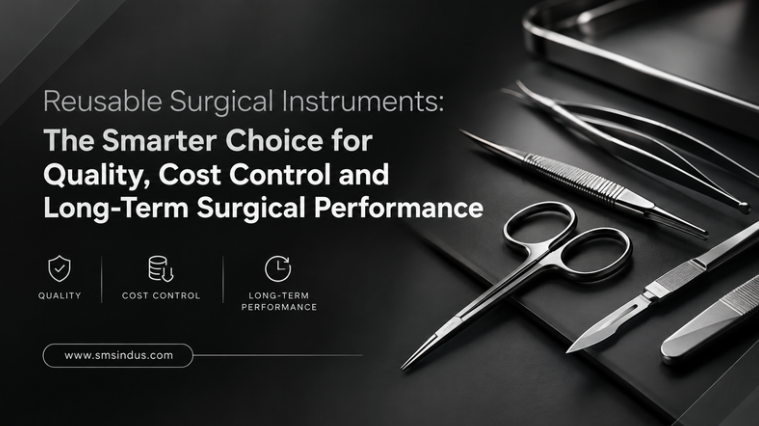
Reusable surgical instruments are not simply tools that can be used more than once. They are carefully designed medical devices intended to withstand repeated clinical use, cleaning, disinfection, sterilization, inspection, handling and storage while maintaining their required performance. From surgical scissors, forceps and needle holders to retractors, clamps and specialized orthopedic instruments, reusable instruments remain a fundamental part of modern healthcare. For hospitals, clinics and surgical teams, the real value goes beyond the initial purchase price. A well-selected reusable instrument can become part of a dependable clinical workflow for years, provided it is manufactured to appropriate quality standards and properly maintained. This is where choosing a trusted supplier matters. NAZMED SMS SDN BHD and the SMS brand are positioned around Surgical Medical Supplies and quality instruments for professional healthcare environments where reliability, precision and long-term usability matter.
The strongest reason healthcare organizations continue to rely on reusable surgical instruments is simple: repeated use can make sense when the instrument is designed, manufactured, processed and maintained correctly. Imagine a busy operating department preparing for another procedure. The surgical team does not have time to wonder whether a clamp will hold properly, whether a needle holder will provide consistent control, or whether a scissor will perform as expected. Every instrument has a job, and every small failure can interrupt the workflow. Reusable surgical instruments are therefore part of a larger system of clinical readiness. Their value depends on material quality, manufacturing precision, joint construction, surface finishing, corrosion resistance, ergonomic design, inspection procedures and reprocessing discipline. For buyers comparing surgical instruments Malaysia suppliers, the important question is not simply, “How much does this instrument cost?” It is, “How confidently can this instrument perform through its intended service life?”
One of the biggest benefits of reusable surgical instruments is long-term economic value. A disposable instrument may appear inexpensive when viewed as a single purchase, but repeated procedures can create a significant recurring procurement burden. Reusable instruments require an initial investment, yet they can be processed and returned to service repeatedly when they remain safe, functional and suitable for use. This can help healthcare organizations approach procurement from a lifecycle-cost perspective rather than focusing only on the lowest unit price. The calculation should include purchase cost, cleaning and sterilization requirements, inspection, maintenance, repair, replacement frequency, storage and eventual disposal. This is why professional procurement teams should evaluate quality instruments based on total value rather than price alone. For Surgical Medical Supplies buyers, the difference between a low-cost instrument and a well-engineered instrument can become increasingly visible over months and years of clinical use.
Material selection is another critical part of reusable surgical instrument performance. Instruments used repeatedly must be capable of tolerating the conditions associated with their intended clinical and reprocessing environment. Stainless steel is widely used across many categories of surgical instruments because appropriate grades can offer useful combinations of strength, corrosion resistance, durability and cleanability. However, saying that an instrument is “stainless steel” does not automatically establish its quality. Buyers should consider the instrument’s construction, finish, mechanical performance, intended application and manufacturing consistency. Hinged instruments such as forceps, clamps and needle holders require particular attention because their moving components must operate smoothly and consistently. At NAZMED SMS SDN BHD, the SMS brand represents an approach to medical products where product suitability and quality are central considerations. Whether the requirement involves surgical instruments, dental instruments or other medical products, professional buyers should always evaluate what sits behind the product description.
Another major advantage of reusable instruments is familiarity. Surgical teams often develop precise handling techniques around instruments they know well. The weight, balance, grip, jaw profile, ratchet mechanism and movement of an instrument can influence how naturally it fits into a procedure. Ergonomics therefore deserves far more attention during procurement than it sometimes receives. A surgeon or dental professional may use an instrument repeatedly throughout a working day, meaning poor design can become a practical problem rather than a minor inconvenience. Well-designed surgical instruments should support controlled handling and appropriate procedural technique without creating unnecessary difficulty. This is particularly relevant for dental instruments, microsurgical instruments, orthopedic instruments and other specialized categories where precision and handling characteristics can be especially important. The right instrument does not need to feel complicated. In fact, good design often feels almost effortless because the instrument behaves predictably in the user’s hands.
Reusable surgical instruments also support a structured approach to inventory management. Instead of continually purchasing individual disposable instruments for every procedure, healthcare facilities can build standardized instrument sets around specific specialties and procedures. A general surgery department, dental clinic, orthopedic unit or specialized surgical center may maintain different trays based on procedural requirements. Standardization can make preparation more predictable, simplify staff training and help procurement teams understand which instruments are actually being used. It can also expose inefficiencies. If a facility repeatedly finds that certain instruments are missing, damaged or unsuitable, that information can guide future purchasing decisions. This is where the role of a dependable Surgical Medical Supplies supplier becomes more important. A supplier should not simply provide a catalogue. The better relationship is one where product specifications, intended applications, quality expectations and purchasing requirements can be discussed clearly.
However, reusable does not mean indestructible. One of the most important points healthcare organizations must understand is that an instrument’s service life depends heavily on how it is handled. Incorrect cleaning, aggressive chemicals, inappropriate brushing, poor drying, inadequate inspection, excessive force, improper lubrication or unsuitable sterilization practices can damage instruments over time. Hinges may become stiff, surfaces may develop corrosion or staining, cutting edges may deteriorate and locking mechanisms may stop functioning as intended. That means the benefits of reusable surgical instruments are closely connected to a disciplined reprocessing and maintenance program. Staff responsible for instrument handling should follow the manufacturer’s instructions for use and the facility’s validated procedures. Instruments should also be inspected before use, particularly when there are concerns about cracks, deformation, corrosion, damaged jaws, loose components or impaired function. Quality at the point of purchase is important, but quality management must continue throughout the instrument’s working life.
The environmental argument for reusable instruments should also be approached carefully. Reuse can reduce the number of individual products entering the waste stream compared with a system based entirely on disposable instruments, but the overall environmental impact depends on the complete lifecycle. Reprocessing consumes water, energy, detergents, packaging and sterilization resources. Transportation, maintenance and eventual disposal also matter. Therefore, healthcare organizations should avoid simplistic claims that reusable automatically means environmentally superior in every circumstance. Instead, the sensible approach is to evaluate the full lifecycle while considering patient safety, infection prevention, operational requirements and resource consumption. For buyers of medical products Malaysia, this broader perspective can support more responsible procurement decisions. The goal should not be to choose reusable instruments because they sound environmentally attractive; the goal should be to choose instruments that are clinically appropriate, durable, maintainable and compatible with a well-managed healthcare workflow.
For procurement teams, selecting reusable surgical instruments should begin with the clinical requirement rather than the catalogue. Start by identifying the procedure, specialty, instrument type, dimensions, working end, handle design, material expectations and required performance characteristics. Then examine the supplier. Can the supplier provide clear product information? Are specifications available? Is there a quality management framework behind manufacturing? Can the supplier support consistent sourcing? Does the product range cover the facility’s wider needs? These questions can separate a serious Surgical Medical Supplies partner from a transaction-only vendor. The SMS brand and NAZMED SMS SDN BHD can be considered when healthcare organizations are evaluating surgical instruments, dental instruments and related medical products for professional use. A strong purchasing decision should ultimately combine clinical suitability, quality, supplier reliability and lifecycle value rather than chasing the cheapest quotation.
The same principle applies when comparing reusable surgical instruments with disposable alternatives. There is no universal answer that says one category is always better. The correct choice depends on the procedure, infection-control requirements, instrument design, facility capabilities, cost structure and applicable regulations or institutional policies. Reusable instruments can be particularly valuable where durable precision instruments are required repeatedly and where the healthcare facility has appropriate reprocessing infrastructure and trained personnel. Disposable products may have a role in situations where single-use design is clinically or operationally appropriate. The sophisticated buyer therefore does not approach procurement as a battle between “reusable” and “disposable.” The better question is whether the selected product is appropriate for its intended use and whether the organization can manage it correctly throughout its lifecycle. That mindset helps hospitals and clinics make decisions based on evidence, workflow and responsibility rather than marketing language.
The future of reusable surgical instruments is likely to be shaped by better materials, improved ergonomics, more specialized designs, stronger traceability and increasingly disciplined procurement. Healthcare buyers are becoming more attentive to what happens after an instrument enters the facility. They want consistency, documentation, dependable supply and products that fit increasingly specialized procedures. Digital inventory systems may make it easier to monitor instrument availability and replacement patterns, while better instrument design can support usability and reprocessing. Yet technology does not remove the fundamentals. A sophisticated tracking system cannot compensate for an unsuitable instrument, and an expensive instrument is not automatically a quality instrument. The foundation remains sound manufacturing, appropriate material selection, functional design, correct use, validated reprocessing and responsible maintenance. This is where the distinction between simply selling surgical instruments and supplying professional Surgical Medical Supplies becomes important. NAZMED SMS SDN BHD, through the SMS brand and SMS Surgical Instruments offering, can serve buyers looking for quality instruments and medical products with a professional procurement mindset.
The final decision should come down to one principle: buy for the procedure, evaluate for the lifecycle and demand quality from the beginning. Reusable surgical instruments can offer durability, familiarity, potential long-term value, standardized workflows and reduced reliance on continuously replacing individual products, but those benefits only become meaningful when the instruments are appropriate for their intended use and properly managed throughout their service life. Hospitals, clinics, dental practices, surgical centers and distributors should therefore resist the temptation to choose solely on price. A reliable instrument is part of the clinical infrastructure, not an insignificant line item on a purchase order. When quality matters, the supplier matters. When consistency matters, the instrument matters. And when every procedure matters, procurement deserves serious attention. For organizations looking for Surgical Medical Supplies, surgical instruments, dental instruments, quality instruments and medical products, NAZMED SMS SDN BHD and the SMS brand provide a professional starting point for evaluating suitable products and supply requirements.
Questions and answers
What are reusable surgical instruments?
Reusable surgical instruments are medical instruments specifically designed to be used repeatedly after appropriate cleaning, disinfection or sterilization and inspection, according to their intended use and the manufacturer’s instructions.
What are the main benefits of reusable surgical instruments?
Key benefits can include long-term value, durability, familiarity for clinical teams, standardized instrument sets and reduced need for repeated purchase of individual instruments when the instruments remain safe and functional.
Are reusable surgical instruments more cost-effective than disposable instruments?
They can be, particularly when they are durable, frequently used and properly maintained. However, cost-effectiveness should be assessed across the complete lifecycle, including purchase, reprocessing, maintenance, repair and replacement.
How long do reusable surgical instruments last?
There is no single lifespan that applies to every instrument. Service life depends on its design, material, frequency of use, handling, cleaning, sterilization, maintenance and inspection. Instruments should be removed from service when they no longer meet required performance or safety criteria.
Why is instrument quality important?
Quality affects factors such as mechanical performance, durability, corrosion resistance, handling and consistency. A low purchase price does not necessarily represent good value if an instrument requires frequent replacement or does not perform as expected.
What should hospitals consider before buying reusable surgical instruments?
Hospitals should consider intended clinical use, specifications, materials, ergonomics, compatibility with reprocessing procedures, supplier reliability, quality systems, lifecycle cost, availability and applicable regulatory or institutional requirements.
Can dental instruments also be reusable?
Yes. Many dental instruments are designed for repeated professional use when they are specifically intended for reuse and are properly cleaned, processed, inspected and maintained according to applicable instructions.
Where can I find Surgical Medical Supplies and quality instruments?
NAZMED SMS SDN BHD and the SMS brand provide Surgical Medical Supplies and medical products for professional healthcare requirements, including surgical instruments and dental instruments.
Need More Information?
Visit our website: www.smsindus.com
Email us: sales@smsindus.com
Call us: +60-3-8024 4401