

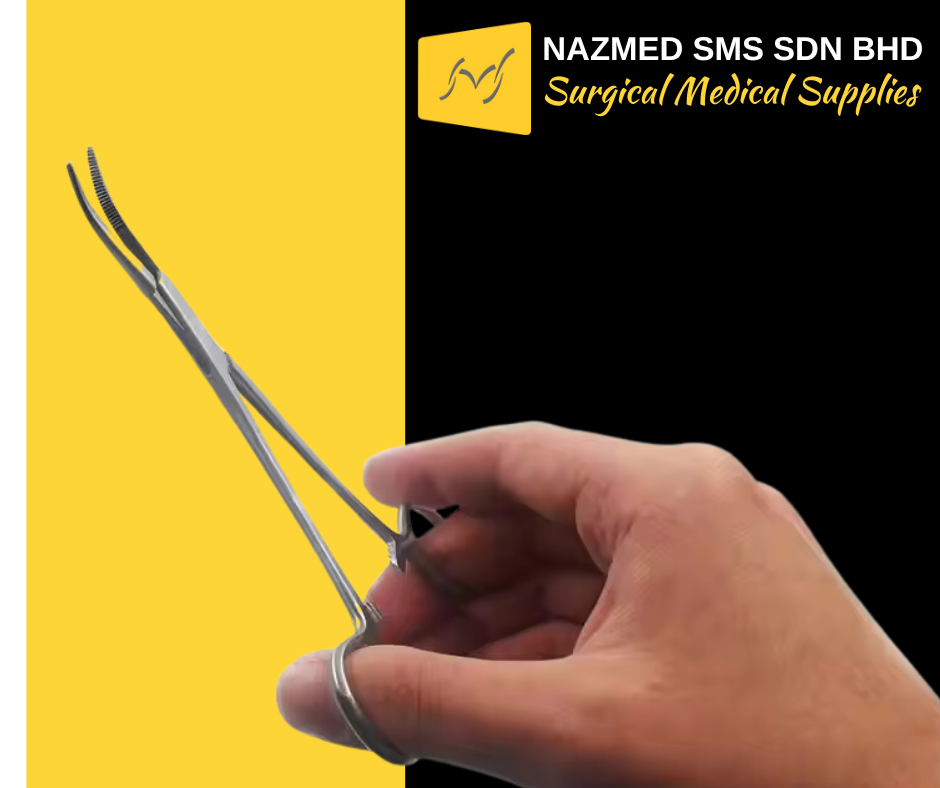
In short: straight and curved Kelly forceps are the same pattern and the same length; only the jaw shape differs. Straight Kelly forceps suit work near the surface with direct access. Curved Kelly forceps keep the tips in view and reach around structures in a deeper field. On our site both are listed at 140 mm.
For the pattern itself, see the Kelly forceps guide.
What stays the same
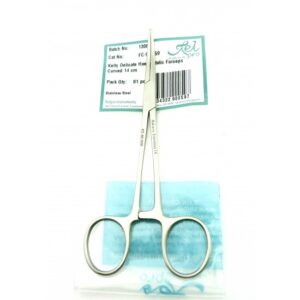
- Finger rings with a ratchet lock.
- Jaws serrated over about half their length.
- Overall length: 140 mm for both shapes on our product page.
What changes
| Point | Straight Kelly | Curved Kelly |
|---|---|---|
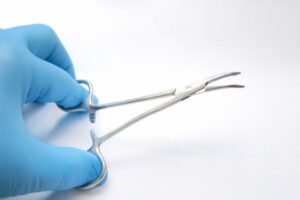
| Jaw shape | In line with the shanks | Bends away from the shanks |
| Generally chosen for | Vessels and tissue near the surface | Deeper sites; passing around or under a structure |
| Product code on our site | SMS-02-3642 | SMS-02-3643 |
Which to order
If the forceps are for general use, order both: they are used together on most trays. If you are replacing instruments in an existing set, match the shape and length of the ones being replaced. Both shapes are on the Kelly haemostatic forceps product page.
Related choices
The same question applies to every haemostat pattern; see straight vs curved artery forceps. If you are unsure whether Kelly is the right size, see Kelly vs mosquito forceps. All patterns are covered in our guide to haemostats and artery forceps.
Frequently asked questions
Are Kelly forceps straight or curved?
Both. Kelly forceps are made in straight and curved versions of the same length.
When are curved Kelly forceps used?
When the tips need to stay visible or reach around a structure, typically in a deeper field.
Need straight or curved Kelly forceps?
Browse the product ranges above or contact NAZMED SMS in Subang Jaya, Selangor, for a quotation: sales@smsindus.com or +60 3-8024 4401.