


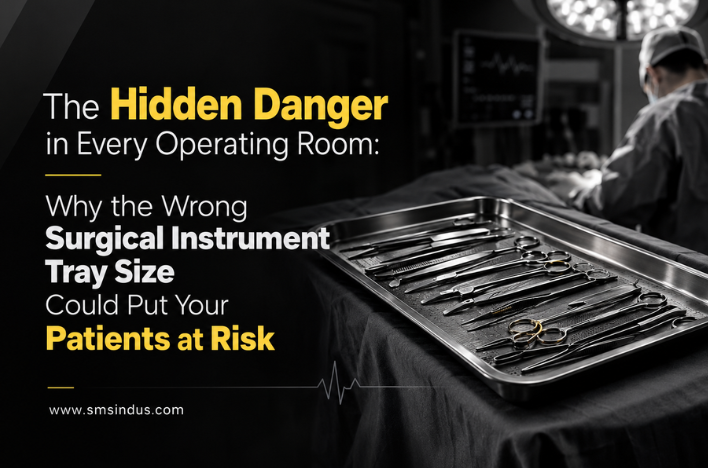
Every second inside an operating theatre matters, and yet one of the most overlooked risks in modern healthcare facilities is something as simple as an incorrectly sized surgical instrument tray. A tray that is too small forces staff to overcrowd instruments, increasing the chance of damage, contamination, and delayed sterilization cycles. A tray that is too large wastes valuable storage space, slows down instrument retrieval during critical moments, and adds unnecessary cost to already stretched hospital budgets. If you are a procurement officer, a clinic owner, a surgeon, or a hospital administrator in Malaysia, this single decision quietly shapes patient safety, surgical efficiency, and long term operational cost more than most people realize, and it deserves far more attention than it usually gets.
Why tray size is a safety decision
Choosing the right size surgical instrument tray is not just a logistics decision, it is a clinical safety decision. Surgical site infections remain one of the leading causes of post operative complications worldwide, and improper instrument organization is a documented contributing factor. When instruments are packed too tightly, sterilization steam cannot circulate properly around every surface, leaving microscopic areas under sterilized. When trays are mismatched to the procedure type, surgical teams waste precious minutes searching for the right tool while a patient remains under anesthesia longer than necessary. This is why leading facilities are shifting toward precision matched trays designed around specific procedures, department needs, and instrument volume rather than relying on generic, one size fits all solutions that were common a decade ago.
Matching trays to the instruments they hold
At NAZMED SMS SDN BHD, this exact problem sits at the center of how surgical medical supplies should be designed and delivered. As a trusted SMS brand serving hospitals, clinics, and dental practices across Malaysia, NAZMED SMS SDN BHD understands that surgical instruments and the trays that hold them cannot be treated as separate purchasing categories. Quality instruments deserve trays engineered to protect their edges, hinges, and delicate tips, and instrument sets should be chosen with tray compatibility in mind. This is the difference between a supplier who simply sells medical products Malaysia wide and a partner who actually understands sterile processing workflows, infection control standards, and the daily pressure faced by operating room staff.
How to plan tray sizes for your procedures
If your facility is still relying on outdated tray sizing charts or guessing based on what fits into your current autoclave, it is time to rethink the entire approach. Start by mapping every procedure your team performs regularly, then categorize instruments by frequency of use, fragility, and sterilization requirements. General surgery trays, orthopedic trays, dental instruments trays, and minor procedure trays all demand different depth, weight distribution, and compartment spacing. Facilities that invest in this mapping process report fewer instrument damage claims, faster turnover between surgeries, and noticeably smoother audits from health authorities. This is not a theoretical benefit, it is a measurable operational improvement that directly affects patient throughput and staff morale.
The cost of poor tray fit
Beyond safety and efficiency, there is a financial urgency that many administrators underestimate. Damaged instruments caused by poor tray fit are not cheap to replace, and Surgical Medical Supplies of professional grade quality represent a meaningful capital investment that deserves protection. A single mismatched tray can shorten the lifespan of an entire instrument set by years, forcing early reorders and disrupting budget planning. Choosing correctly sized trays from a reliable SMS brand supplier is essentially an insurance policy against premature wear, corrosion from improper drainage, and the compounding cost of replacing quality instruments far sooner than expected. In an era where healthcare budgets are under constant scrutiny, this is the kind of quiet efficiency that adds up significantly over a fiscal year.
Trends in instrument tray systems
Looking ahead into 2026 and beyond, the surgical supply industry is moving toward smarter, more customizable tray systems, including modular compartments that adjust to procedure specific instrument counts and color coded trays that speed up visual identification during high pressure moments. Search behavior is also evolving, with more procurement teams and clinicians using voice search and AI powered assistants to ask direct questions like which tray size is best for laparoscopic instruments or how to choose surgical trays for a small clinic in Malaysia. Content and suppliers that answer these real world questions clearly and confidently are the ones being surfaced first, and this shift toward generative and ask based search engines means transparency, clarity, and genuine expertise now matter more for visibility than ever before. NAZMED SMS SDN BHD continues to align its product range and guidance with these real questions, ensuring that clinics and hospitals get practical answers rather than generic sales pitches.
Summary
The bottom line is simple, the size of a surgical instrument tray is never just a packaging detail, it is a decision that touches patient safety, staff efficiency, instrument longevity, and long term cost control all at once. If your facility has not reviewed its tray sizing strategy recently, now is the moment to act before a preventable incident forces the conversation. Reach out to a supplier who treats surgical medical supplies as a complete system rather than a checklist of individual items. For expert guidance on selecting the right surgical instrument trays, dental instruments, and quality instruments tailored to your facility, visit www.smsindus.com, email sales@smsindus.com, or call +60-3-8024 4401 to speak with the NAZMED SMS SDN BHD team today.
Frequently asked questions
Why does surgical instrument tray size matter?
A tray that is too small forces staff to overcrowd instruments, while the right size helps protect instruments and keeps them organised for sterilisation and use.
How should a facility plan its tray sizes?
Map the procedures your team performs regularly, then group instruments by frequency of use, fragility and sterilisation requirements. General surgery, orthopedic, dental and minor procedure trays need different depth, weight distribution and compartment spacing.
Instrument trays are part of the hollow ware range at NAZMED SMS. The guide to hospital hollow ware sets out the groups in that range.
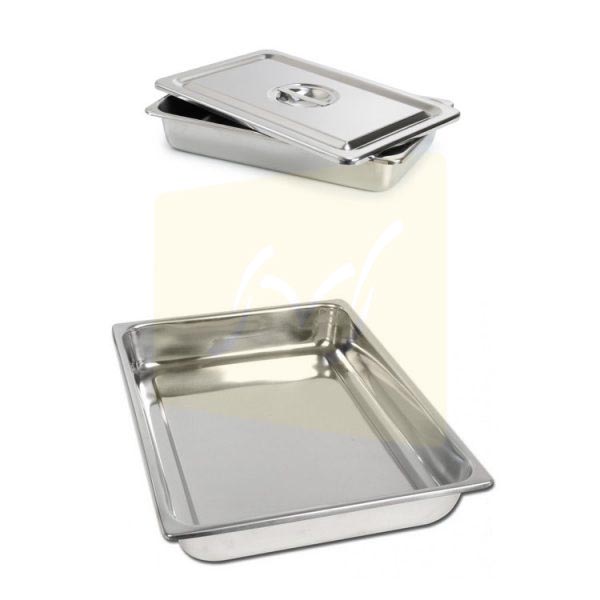
Instrument trays and sterilisation containers
Browse instrument trays, sterilisation container systems and surgical sets, or contact NAZMED SMS for a quotation.