

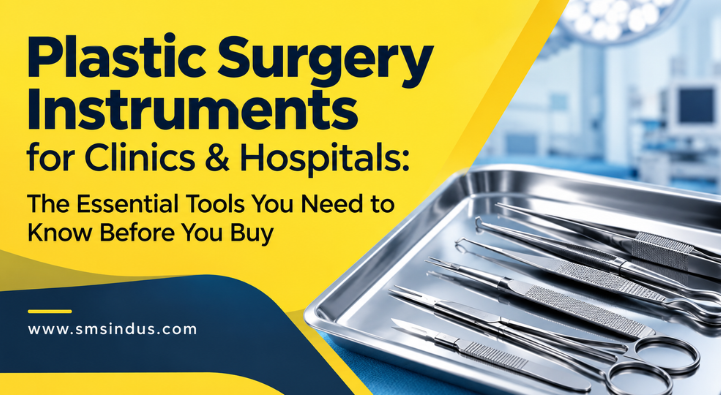
A complete buyer guide to choosing quality plastic surgery instruments, understanding their clinical uses, improving instrument selection, supporting precise procedures and building a reliable surgical instrument inventory for modern clinics and hospitals . Plastic surgery is one of the most precision-focused areas of modern surgery. Whether the procedure involves reconstructive surgery, wound management, soft-tissue procedures, hand surgery, facial surgery, skin procedures or aesthetic surgical applications, the instruments used by the surgical team must be appropriate for the task. The difference between an ordinary instrument and a well-designed, quality instrument may not always be obvious when looking at a catalogue photograph, yet experienced surgeons and operating-room professionals understand how much instrument selection can influence handling, access, visibility, tissue manipulation and workflow. This is why clinics and hospitals should not approach plastic surgery instrument procurement as a simple price comparison. The real question is not merely which instrument costs less, but which instrument is appropriate for the intended procedure, provides the required handling characteristics, can be properly processed and maintained, and comes from a supplier capable of providing consistent quality and dependable support.
Why plastic surgery needs delicate instruments
Plastic surgery frequently requires delicate tissue handling and controlled movements. Depending on the procedure, surgeons may work with skin, subcutaneous tissue, fascia, blood vessels, nerves or other structures where precision and careful manipulation are important. Instruments therefore need to be selected according to their intended function rather than simply according to their appearance. Forceps, scissors, needle holders, retractors, clamps, dissecting instruments, skin hooks and specialized plastic surgery instruments can all serve different roles. A surgeon may need a delicate instrument for precise tissue handling in one part of a procedure and a stronger instrument for another task. The procurement team therefore needs to understand that “plastic surgery instruments” is a broad category rather than one single type of product. The correct purchasing strategy begins with the procedure, the surgeon’s requirements and the facility’s workflow. It then moves into product specifications, quality evaluation, reprocessing considerations, inventory planning and supplier selection. A clinic purchasing a basic set for a new plastic surgery service may have different requirements from a large hospital performing a wide range of reconstructive procedures. A specialist surgeon may also have established preferences regarding handle design, instrument length, jaw configuration and overall balance. The buyer’s job is to translate those clinical requirements into a clear purchasing specification. This is where professional suppliers such as NAZMED SMS SDN BHD, SMS brand, Surgical Medical Supplies and SMS Surgical Instruments can support healthcare buyers by providing access to relevant instrument categories and helping customers identify products according to their requirements.
Forceps
Essential plastic surgery instruments every buyer should understand. One of the most important categories in plastic surgery is the forceps. Forceps are available in numerous designs, sizes and configurations, and their intended applications can differ significantly. Tissue forceps are commonly used to grasp and manipulate tissue, while more delicate designs may be intended for fine surgical work. The buyer should pay attention to the working end, jaw configuration, dimensions, grip and intended application. A delicate procedure may require an instrument designed for controlled manipulation rather than an instrument intended for stronger grasping. This is why purchasing teams should avoid selecting forceps solely because the product name appears familiar. They should verify the actual pattern and specifications required by the surgical team.
Surgical scissors
Surgical scissors are another fundamental category. Different scissors may be designed for cutting tissue, sutures, dressings or other materials. Curved and straight configurations can serve different purposes, while different lengths and working-end designs can affect access and control. A plastic surgery instrument set may include several types of scissors because one instrument cannot perform every cutting task equally well. When evaluating scissors, buyers should consider the intended application, cutting characteristics, construction, handle design, balance and maintenance requirements. Cutting instruments also require appropriate inspection and care throughout their lifecycle.
Needle holders
Needle holders are essential for suturing and are particularly important when controlled needle handling is required. Different needle holders can vary in size, jaw configuration, handle design and intended use. The surgeon needs an instrument that provides appropriate control for the type of suturing being performed. A buyer should therefore confirm the required size and pattern rather than simply purchasing a generic needle holder.
Retractors
Retractors can help provide exposure during surgical procedures. Plastic surgery procedures may require different approaches to tissue and wound exposure, so the correct retractor depends on the surgical application. Retractors should be selected according to their intended purpose, dimensions and tissue-management requirements. The procurement team should consult the clinical users when deciding which configurations are needed.
Skin hooks
Skin hooks and delicate retracting instruments can be particularly relevant to procedures where controlled tissue handling and exposure are required. Their design should be evaluated carefully because small differences can affect handling. The clinical team should have input when selecting specialized instruments.
Haemostatic clamps and forceps
Hemostatic clamps and forceps can also form part of relevant surgical instrument sets. The appropriate instrument depends on the clinical application and the facility’s established surgical protocols. Buyers should verify the exact instrument pattern required rather than relying on generic terminology.
Dissecting instruments
Dissecting instruments are another important category. Plastic surgery often involves detailed soft-tissue work, making appropriate instrument selection particularly important. The surgeon’s technique, procedure and tissue requirements should guide the choice.
Why quality matters when buying
Why quality matters when buying plastic surgery instruments. A surgical instrument is handled by a trained professional in an environment where precision matters. That alone should change how buyers think about procurement. Quality should not be treated as a marketing phrase. It should be evaluated through characteristics relevant to the intended application. The buyer should consider workmanship, appropriate material, surface finish, alignment, functionality, handling, durability, consistency and suitability for the facility’s reprocessing procedures. For instruments with moving components, the movement and mechanical characteristics deserve attention. For grasping instruments, jaw alignment and grip can matter. For cutting instruments, appropriate cutting performance matters. For needle holders, secure and controlled needle handling matters. For delicate plastic surgery instruments, the relationship between size, balance, working-end design and handling may be particularly important. This is why experienced surgical professionals often have strong preferences regarding instruments. The instrument becomes an extension of the surgeon’s hands. A procurement department may see a product number. The surgeon sees how that product behaves during a procedure. Both perspectives are important. This is why clinics and hospitals should involve actual users when evaluating significant purchases. Where appropriate, product samples can allow clinical professionals to assess handling before a larger purchase.
A reconstructive surgery team may require delicate forceps, scissors, retractors, needle holders and specialized instruments appropriate to the procedure. Microsurgical or highly delicate procedures may introduce additional instrument requirements, and these should be defined by the clinical team. The procurement department should not attempt to create a reconstructive surgery instrument set without clinical input. Instead, the team should identify procedures, establish preferred instrument patterns and then work with a qualified supplier. For hospitals expanding reconstructive services, this approach can prevent unnecessary purchasing and create a more standardized inventory. Plastic surgery instruments for aesthetic procedures Aesthetic surgery can involve procedures requiring controlled soft-tissue handling and precise surgical work.
Buying through distributors
A distributor selling SMS Surgical Instruments or other surgical instrument categories should understand the products well enough to answer customer questions. The distributor’s reputation depends partly on the reliability of its product portfolio. For this reason, supplier selection should be strategic. The future of plastic surgery instrument procurement in 2026 The healthcare purchasing environment is becoming increasingly digital. Buyers are researching suppliers online. They are comparing product specifications. They are asking AI-powered search systems questions. They are looking for educational information before contacting sales teams. This creates a major opportunity for medical-device suppliers. Instead of publishing only catalogue pages, suppliers can publish useful resources answering real buyer questions. What instruments are needed for plastic surgery? How do you choose quality surgical instruments? What should hospitals consider when buying reusable instruments? How should clinics evaluate surgical instrument suppliers? What should buyers check before purchasing dental, orthopedic or plastic surgery instruments? These questions reflect real purchasing intent. The strongest medical-device content should answer them clearly.
Healthcare buyers researching NAZMED SMS SDN BHD, SMS brand, Surgical Medical Supplies, SMS Surgical Instruments, surgical instruments Malaysia, dental instruments Malaysia, orthopedic instruments Malaysia, plastic surgery instruments Malaysia, quality instruments and medical products Malaysia should approach sourcing with a clear understanding of their clinical requirements.
And most importantly, involve the people who will actually use and process the instruments. For clinics and hospitals building or upgrading their plastic surgery instrument inventory, the goal should not be to purchase the largest number of products. The goal should be to create the right instrument inventory for the procedures your team actually performs. That is the difference between buying instruments and building a professional surgical instrument system. When you are ready to evaluate your next requirement, NAZMED SMS SDN BHD, SMS brand, Surgical Medical Supplies and SMS Surgical Instruments can be part of your supplier research.
Need More Information?
Website: www.smsindus.com
Email: sales@smsindus.com
Call: +60-3-8024 4401
The smartest time to review your surgical instrument requirements is before you have an urgent shortage, before an instrument reaches the end of its useful life and before a procurement problem becomes an operational problem.
Choose the instrument for the procedure. Choose quality over assumptions. Choose the supplier with the information and support your healthcare organization needs.
In a surgical set
SMS lists two sets for plastic surgery: the Basic Plastic Set (20 items) and the Plastic and Facial Surgery Set (17 items). The two are compared in plastic surgery sets compared.
Frequently asked questions
Which instruments are commonly used in plastic surgery?
Key categories include forceps, surgical scissors, needle holders, retractors, skin hooks, haemostatic clamps and forceps, and dissecting instruments.
Who should be involved in choosing plastic surgery instruments?
Involve the people who will actually use and process the instruments, as well as procurement.
Plastic surgery instruments from NAZMED SMS
Browse surgical scissors, needle holders and hooks and retractors, or contact NAZMED SMS for a quotation.