
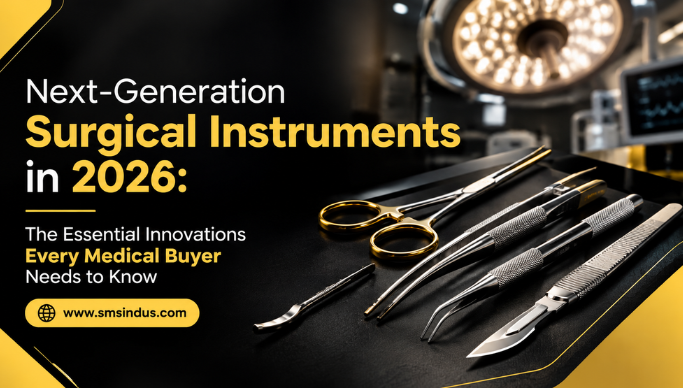
Surgical instruments are no longer evolving only through changes in shape, size or material. The market is moving toward instruments designed around precision, ergonomics, visualization, minimally invasive procedures, digital integration, smarter workflows, improved reprocessing and increasingly demanding clinical requirements. For hospitals, surgeons, dental professionals, orthopedic teams and procurement departments, understanding these innovations is becoming essential before the next instrument purchase.
What is driving innovation in surgical instruments?
Several forces are pushing manufacturers and medical-device companies to rethink instrument design. One is the growing demand for minimally invasive procedures. Minimally invasive surgery requires surgeons to work through smaller access points and frequently under visualization technologies rather than direct exposure. That changes the requirements for instruments. Instruments may need longer shafts, specialized tips, improved articulation, better control and compatibility with visualization systems. The surgeon may have less direct tactile and visual access to the operative field, making instrument control particularly important. Another force is ergonomics. Healthcare professionals perform repetitive movements and may spend long periods using specialized instruments. An instrument that is difficult to grip or awkwardly balanced can create unnecessary physical demands. As a result, ergonomic design is becoming a more important consideration in instrument development. Another major factor is the growth of specialized procedures. Modern surgery is increasingly divided into highly specialized fields. General surgery, orthopedic surgery, cardiovascular surgery, neurosurgery, ophthalmic surgery, ENT, gynecology, urology and other specialties each have unique requirements. The same trend appears in dentistry. Dental professionals require instruments designed around specific procedures and anatomical requirements. Orthopedic surgery has its own highly specialized instrument ecosystem.
Smarter instrument design is becoming a major market trend
One of the most important innovations in surgical instruments is not always visible. It is the improvement of design. Modern engineering allows manufacturers to study how instruments are held, moved and applied. This can lead to changes in handle geometry, grip surfaces, balance, articulation and working-end configuration. Ergonomic innovation is particularly relevant for instruments used repeatedly. A surgeon may use a particular forceps or needle holder hundreds of times during routine work. Small improvements in comfort and control can therefore become meaningful over time. However, ergonomic design should always be evaluated according to the intended user and application. There is no universal instrument that is perfect for every clinician. This is why healthcare organizations should involve actual users when evaluating new products. A procurement department may appreciate the specification sheet. A surgeon may notice the balance. A sterile processing professional may notice the clean ability. A nurse may notice how the instrument fits into a set. All of these perspectives can be valuable.
Artificial intelligence is influencing the future of surgical technology
Artificial intelligence is one of the most discussed developments in healthcare, but its relationship with surgical instruments requires careful explanation. AI does not mean that every surgical instrument is suddenly an “AI instrument.” Instead, AI can influence the ecosystem surrounding surgical instruments. AI may support image analysis, planning, navigation, workflow analysis, documentation and decision-support applications. As these systems develop, instruments may increasingly operate within digitally supported surgical environments. This could eventually create more opportunities for instrument tracking, workflow optimization and data-driven equipment management. For procurement departments, the lesson is simple. Do not buy a product simply because it has an “AI” label. Ask what the technology actually does. Does it solve a genuine problem? Is it clinically appropriate? Is it validated for the intended application? What infrastructure does it require? What are the maintenance requirements? How does it integrate with existing systems? These questions help distinguish meaningful innovation from marketing language.
Surgical instruments are becoming more specialized
The era of the “one instrument fits everything” approach is disappearing. Modern surgery increasingly requires specialized tools. This is especially visible in orthopedic surgery. Orthopedic instruments may be designed for specific procedures, anatomical areas or systems. The same is true in dental surgery. Periodontal, restorative, extraction and oral surgical procedures can require very different instruments. This specialization creates an important challenge for procurement. More specialized instruments mean more detailed specifications. Healthcare buyers must become more knowledgeable. They need to understand exactly what their clinical teams require. This is why educational content about dental instruments, orthopedic instruments and surgical instruments has become increasingly valuable.
Reprocessing and cleanability are part of modern instrument innovation
One of the most important innovations may be less glamorous than robotics. It is designing instruments that can be appropriately processed and inspected. Reusable instruments need to fit into the healthcare facility’s decontamination and sterilization workflow. The World Health Organization emphasizes the importance of appropriate cleaning, inspection, sterilization and quality control in medical-device reprocessing. (who.int) This means buyers should ask questions about cleaning and maintenance before purchasing. Can the instrument be inspected effectively? Are there complex areas that require special attention? What are the manufacturer’s care instructions? Is lubrication required for applicable components? What signs indicate that the instrument should be removed from service? These questions should be part of the purchasing process.
How to evaluate a new surgical instrument before buying it
The first question is simple. What problem does the new instrument solve? If the answer is unclear, be cautious. Next, ask what makes it different from the existing instrument. Then examine the intended use. Review the specifications. Consider ergonomics. Consider compatibility. Consider reprocessing. Review relevant documentation. Evaluate applicable regulatory requirements. Ask about availability. Ask about replacement. Ask about maintenance. Consider lifecycle value. Where appropriate, request samples or conduct structured user evaluation. This process can help prevent healthcare organizations from purchasing innovation simply because it is fashionable.
Why supplier quality matters more as instruments become more advanced
As instruments become more specialized, the supplier’s role becomes increasingly important. A buyer may not have the technical knowledge to evaluate every new instrument independently. A professional supplier can help explain specifications and intended applications. This is especially important for Surgical Medical Supplies, SMS Surgical Instruments and specialized medical products. Healthcare buyers should look for suppliers that understand their product categories and can communicate clearly. For organizations researching NAZMED SMS SDN BHD, supplier evaluation should include product suitability, quality information, documentation, supply reliability and customer support. The strongest supplier relationship is not based on price alone. It is based on trust and consistency.
The importance of quality management in surgical instrument innovation
Innovation without quality control is not enough. Medical-device manufacturers and suppliers need systems that support consistent products and applicable regulatory requirements. ISO 13485 remains a key international quality-management standard for medical devices, covering quality-management requirements within the medical-device lifecycle. ISO confirmed the 2016 edition remains current after its 2025 review. (iso.org) This is relevant to buyers because product innovation should exist within a controlled quality environment. A new design needs appropriate development, verification, validation and manufacturing controls according to applicable requirements. Buyers should therefore consider quality systems as part of supplier due diligence.
Malaysia’s medical-device market and what buyers should know
For organizations sourcing medical products Malaysia, regulatory awareness is an important part of procurement. Malaysia’s Medical Device Authority is responsible for regulating medical devices and related industry activities under the Medical Device Act framework. Its regulatory scope includes areas such as medical-device registration and establishment licensing. (mda.gov.my) Healthcare buyers should determine which regulatory requirements apply to the specific product and procurement situation. This is particularly important as new technologies enter the market. Innovation can create new product categories and new regulatory questions. A professional supplier should be able to direct buyers toward appropriate product and regulatory information.
What should hospitals buy in 2026?
Hospitals should not ask, “What is the newest surgical instrument?” They should ask, “What technology or instrument design can improve our actual clinical requirements?” That distinction can save money and improve procurement quality. A hospital should evaluate its procedure mix. Review instrument utilization. Identify recurring problems. Examine replacement patterns. Gather surgeon feedback. Consult sterile processing professionals. Review applicable regulatory requirements. Then investigate new products that address genuine needs. This approach ensures innovation is driven by clinical value rather than marketing.
What should dental clinics look for?
Dental clinics should evaluate innovation through the lens of everyday workflow. Does the instrument improve control? Does it fit the procedure? Is it comfortable? Can it be effectively cleaned and processed? Does it offer appropriate durability? Is it available consistently? Does the supplier provide adequate product information? Does it make economic sense? These questions are more useful than simply asking whether an instrument is “new.”
What should orthopedic departments look for?
Orthopedic teams should focus particularly on application and compatibility. The instrument must match the intended procedure. Specialized systems require careful attention to compatibility and manufacturer requirements. The buyer should verify dimensions and intended applications rather than assuming that similar-looking products are interchangeable. This is where specialist suppliers and accurate product information become extremely important. The commercial opportunity behind surgical instrument innovation Innovation creates opportunities for suppliers as well as healthcare buyers. Healthcare professionals are constantly looking for ways to improve their workflows. A supplier that can explain new technologies clearly can become an important information source. This is particularly relevant for NAZMED SMS SDN BHD, SMS brand, Surgical Medical Supplies and SMS Surgical Instruments. Instead of simply presenting products, a modern supplier can educate buyers about what is changing and why it matters. That approach builds trust. And trust drives purchasing decisions. A buyer is more likely to contact a supplier who has already helped answer important questions.
Why buyers should start preparing now
Healthcare technology moves quickly. A procurement strategy created several years ago may not reflect today’s market. Hospitals should periodically review their instrument portfolios. Dental clinics should assess their frequently used instruments. Orthopedic departments should review specialized instrument requirements. Distributors should examine emerging product categories. Procurement teams should track changes in supplier capabilities. And medical-device suppliers should continuously improve their educational resources. This is not about chasing every trend. It is about staying informed.
Final thoughts: innovation should make surgery better, not simply newer
The future of surgical instruments is exciting. From ergonomic hand instruments to minimally invasive technologies, advanced visualization, specialized orthopedic tools, innovative dental instruments, robotic-assisted systems and digitally supported workflows, the market continues to evolve. But the central purpose remains unchanged. The instrument must help a trained healthcare professional perform the intended task appropriately. That means innovation should ultimately be measured by usefulness. Does it improve control? Does it support precision? Does it improve workflow? Does it provide appropriate ergonomics? Does it fit the procedure? Can it be managed and processed correctly? Does it offer meaningful lifecycle value? Can the supplier provide consistent quality and support? These are the questions that matter.
Need More Information?
NAZMED SMS SDN BHD
SMS brand | Surgical Medical Supplies | SMS Surgical Instruments
Website: www.smsindus.com
Email: sales@smsindus.com
Call: +60-3-8024 4401
Explore the NAZMED SMS range
Browse surgical instruments, dental instruments and orthopedic instruments, or download the product catalogues.