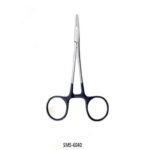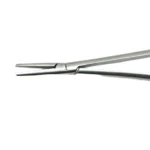


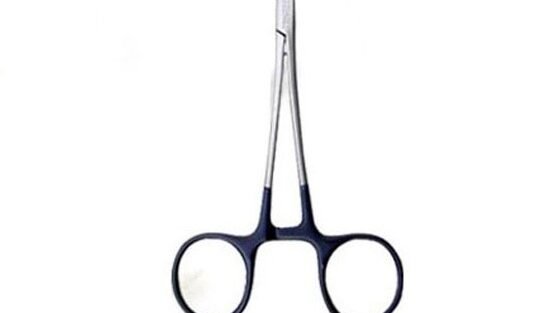
In short: haemostatic clamps (haemostats) have serrated jaws that grip firmly and are used on vessels that will be tied off or cauterised. Atraumatic vascular clamps, such as bulldog, anastomosis and aorta clamps, have fine atraumatic teeth and are made to hold or occlude a vessel with less injury to its wall. The choice depends on whether the vessel is to be sealed or preserved.
For all clamp groups, see surgical clamps: types and uses; for haemostats, see our guide to haemostats and artery forceps.
Haemostatic clamps
Haemostatic forceps such as Kelly, Crile, Pean and mosquito patterns have horizontally serrated jaws and a ratchet lock. Our product pages describe them as used for clamping blood vessels or tissue before cauterisation or ligation. They are listed under Forceps and Clamps.
Atraumatic vascular clamps
- Bulldog clamps and vessel clips: small clamps for arteries and veins. DeBakey bulldog clamps are described as having 1×2 rows of fine, atraumatic teeth.
- Ring-handle bulldog clamps: Cooley and DeBakey patterns, straight, curved and angled, listed as Bulldog Clamps Ring Handle.
- Anastomosis clamps: Cooley, Derra-Cooley and DeBakey patterns in the Atraumata Anastomosis Clamps range, and Satinsky anastomosis clamps.
- Aorta clamps: DeBakey, Morris, Weber and other patterns under Aorta Clamps.
Side by side
| Point | Haemostatic clamps | Atraumatic vascular clamps |
|---|---|---|
| Jaw surface | Horizontal serrations; some with 1×2 teeth | Fine atraumatic teeth |
| Typical purpose | Clamp a vessel before ligation or cauterisation | Hold or occlude a vessel during vascular work |
| Form | Ring handles with a ratchet | Small clip-style clamps (bulldog) or ring-handle clamps |
| Where listed | Forceps and Clamps | Bulldog Clamps; Vascular Thoracic |
How to choose
Ask first whether the vessel will be sealed or kept. Then match the clamp to the vessel size and the access: straight, curved or angled jaws, and the jaw length. Pattern preference varies between surgeons, so confirm the exact pattern and size with the user before ordering.
Frequently asked questions
What is the difference between a haemostat and a vascular clamp?
A haemostat has serrated jaws and is used on vessels that will be tied off or cauterised. A vascular clamp has fine atraumatic teeth and is made to hold or occlude a vessel with less injury to its wall.
What does atraumatic mean for a clamp?
It describes a jaw surface, such as rows of fine teeth, that is designed to hold a vessel or tissue with less damage than a serrated crushing jaw.
Need haemostatic or vascular clamps?
Browse the product ranges above or contact NAZMED SMS in Subang Jaya, Selangor, for a quotation: sales@smsindus.com or +60 3-8024 4401.