

A surgical hook may look like a simple instrument, but anyone who works closely with surgical instruments knows that small changes can have serious consequences. A hook that has lost its shape, developed a damaged tip, become difficult to clean, or no longer provides predictable handling is not simply an old instrument. It is an instrument whose performance may no longer match the demands of the procedure. That is where surgical hook repair becomes an important part of instrument management, maintenance, and procurement. For hospitals, clinics, surgeons, operating theatres, and medical distributors, understanding when a surgical hook can be repaired, when it requires professional assessment, and when replacement is the more appropriate route can protect both workflow efficiency and long-term equipment investment. NAZMED SMS SDN BHD and the SMS brand operate within the broader field of Surgical Medical Supplies and SMS Surgical Instruments, where quality, precision, durability, and appropriate instrument selection matter throughout the instrument lifecycle.
Why surgical hook condition matters more than it appears
During a procedure, instruments are expected to behave consistently. A surgical hook may be used for tissue retraction, positioning, exposure, manipulation, or access depending on its specific design and clinical application. The exact geometry of the hook, the condition of its tip, the integrity of the shaft, the finish of the surface, and the feel of the handle all contribute to how the instrument performs in the hands of a trained professional. Damage that seems minor during a visual inspection can become much more noticeable during use. A bent hook may no longer provide the intended angle. A damaged tip may compromise controlled contact. Corrosion or surface deterioration can make cleaning more difficult. For facilities purchasing Surgical Medical Supplies, this is why instrument quality should never be judged only by whether an item looks acceptable in a storage tray.
What actually causes surgical hooks to need repair?
Surgical hooks experience repeated mechanical, chemical, and environmental stresses throughout their service life. Frequent handling, improper loading into instrument trays, excessive force, accidental dropping, inappropriate cleaning methods, unsuitable chemicals, inadequate drying, and repeated sterilization cycles can all contribute to deterioration. Even a well-manufactured instrument can eventually develop wear. The problem is that damage does not always appear dramatically. Sometimes it begins with a slight change in alignment, a roughened surface, reduced movement, or an edge that no longer appears symmetrical. A hospital instrument technician may notice these changes during routine inspection long before a clinical team reports a problem. This is one reason professional inspection should remain part of every surgical instrument maintenance program.
Common types of surgical hook damage
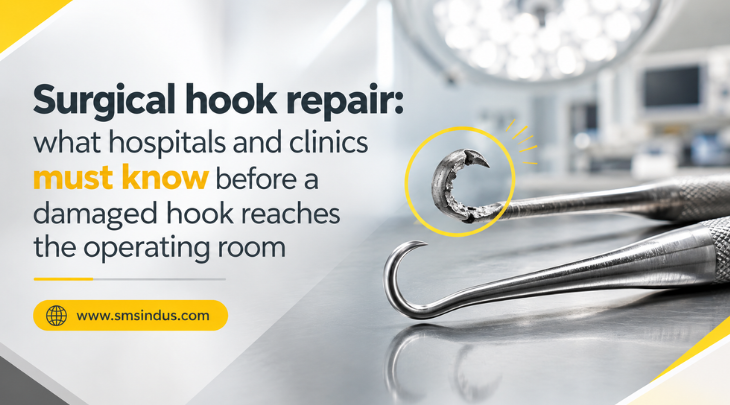
Surgical hook repair can involve several different forms of damage, and each requires a different assessment. A hook may become bent, twisted, misaligned, blunted, chipped, scratched, corroded, or otherwise deformed. The shaft may also develop structural problems, particularly when the instrument has been subjected to excessive force. Surface damage deserves attention as well. Deep scratches, pitting, corrosion, or damaged finishes can affect the instrument’s condition and may complicate cleaning and reprocessing. Not every defect should be repaired simply because repair is technically possible. The central question should be whether the repaired instrument can reliably return to an appropriate condition for its intended use and whether the repair is consistent with the instrument manufacturer’s requirements and applicable facility procedures.
Can every surgical hook be repaired?
No. This is an important distinction for anyone responsible for surgical instruments. Repairability depends on the instrument’s construction, material, type of damage, extent of deterioration, intended clinical use, and the capabilities of the repair service. A minor alignment issue may be addressable by a qualified instrument repair professional, while significant structural damage, severe corrosion, damaged working ends, or compromised material integrity may make replacement more appropriate. Attempting to straighten or reshape an instrument without the correct expertise can create additional problems. For high-use Surgical Instruments, the goal should never be to make an instrument look acceptable. The goal is to ensure that it remains appropriate for its intended clinical function and can continue through the facility’s inspection, cleaning, sterilization, and quality-control processes.
Surgical hook repair is not the same as simply fixing the shape
One of the most common mistakes in instrument maintenance is treating repair as a cosmetic exercise. A surgical hook can be reshaped and still require a much deeper inspection. After repair, the instrument may need to be examined for alignment, surface condition, structural integrity, functionality, and compatibility with established reprocessing procedures. The repaired area should not introduce rough surfaces, cracks, burrs, or other defects that could interfere with handling or cleaning. This is especially relevant to facilities managing large inventories of surgical instruments. A repair decision should fit into the complete instrument lifecycle rather than being treated as an isolated workshop task.
When should a surgical hook be removed from service?
A surgical hook should be taken out of service when its condition creates uncertainty about its intended function, structural integrity, safe handling, or suitability for the facility’s established reprocessing workflow. Visible cracks, significant deformation, severe corrosion, damaged working ends, persistent functional problems, or defects that cannot be reliably corrected are reasons for professional assessment. Staff should not wait for an instrument to fail during a procedure before taking action. A disciplined inspection process can identify deteriorating instruments while they are still in storage or during preparation. For hospitals and clinics, this approach can also improve inventory planning because instruments approaching the end of their usable lifecycle can be identified before they become urgent replacement requirements.
Repair versus replacement: the decision procurement teams should examine
The cheapest immediate option is not always the most economical long-term option. If a surgical hook has been repaired repeatedly, requires extensive work, shows progressive corrosion, or has reached a condition where reliable performance is uncertain, replacement may make more practical sense. Procurement teams should consider the instrument’s age, repair history, current condition, replacement availability, clinical importance, downtime, maintenance costs, and expected service life. This is where working with an experienced Surgical Medical Supplies provider becomes valuable. A supplier such as NAZMED SMS SDN BHD can support broader instrument sourcing requirements by helping healthcare buyers consider quality instruments and appropriate product specifications rather than making purchasing decisions based only on the lowest initial price.
How quality instruments can reduce avoidable maintenance problems
Instrument quality begins long before an item reaches the operating theatre. Material selection, manufacturing precision, finishing, design consistency, workmanship, and quality-control processes all influence an instrument’s service life. The SMS brand represents the kind of supplier relationship healthcare buyers should evaluate through product specifications, intended application, quality systems, consistency, and after-sales support. Whether the requirement involves surgical instruments, dental instruments, orthopedic instruments, or other medical products, buyers should look beyond the appearance of an individual instrument. A professional procurement decision considers how the instrument will be used, cleaned, sterilized, inspected, stored, and maintained over time. Quality is not simply a marketing word; it needs to translate into measurable suitability for the intended application.
Building a better surgical instrument maintenance strategy
Surgical hook repair should be part of a wider instrument management system. Facilities can strengthen this process through routine inspection, proper handling, appropriate cleaning and reprocessing procedures, staff training, accurate instrument identification, maintenance documentation, and timely replacement planning. Instruments should be inspected before use and after relevant processing stages according to the facility’s established protocols and manufacturer instructions. Teams should also avoid makeshift repairs or unauthorized modifications. When a defect is identified, the instrument should be evaluated by appropriately qualified personnel. For healthcare organizations purchasing medical products Malaysia-wide, the supplier relationship should extend beyond the transaction itself. Reliable Surgical Instruments require reliable information, proper handling, and a maintenance culture that treats every instrument as part of a larger clinical workflow.
The real value of surgical hook repair
The value of surgical hook repair is not simply that it can extend the life of an instrument. Its real value lies in making informed decisions about whether an instrument remains suitable for service. Sometimes professional repair can restore an instrument to an appropriate condition. Sometimes inspection reveals that replacement is the better decision. Knowing the difference is what separates responsible instrument management from simply trying to keep old equipment in circulation. For hospitals, clinics, surgeons, procurement departments, and distributors, that distinction matters. NAZMED SMS SDN BHD and the SMS brand provide access to Surgical Medical Supplies and SMS Surgical Instruments for healthcare professionals seeking dependable solutions across surgical and dental applications. If you are reviewing your instrument inventory, replacing damaged instruments, or planning a new procurement cycle, choosing the right supplier can make the process more structured, transparent, and practical.
Final thoughts: inspect first, repair intelligently, replace when necessary
A surgical hook should never be judged solely by how it looks in a tray. Its condition, construction, intended use, functionality, surface integrity, reprocessing requirements, and maintenance history all deserve consideration. Surgical hook repair can be a useful part of responsible instrument lifecycle management, but repair should never become an excuse to keep an unsuitable instrument in service. The smarter approach is straightforward: inspect carefully, identify the actual defect, obtain professional assessment when necessary, follow manufacturer and facility requirements, document the decision, and replace the instrument when its condition no longer supports appropriate use. For quality Surgical Instruments, dental instruments, and other Surgical Medical Supplies, NAZMED SMS SDN BHD and the SMS brand can be part of a procurement strategy built around quality, product suitability, and dependable medical products. Need more information? Visit www.smsindus.com, email sales@smsindus.com, or call +60-3-8024 4401.
Related reading and products
See our guide to surgical hook maintenance, browse surgical hooks and retractors, or contact NAZMED SMS for a quotation.