


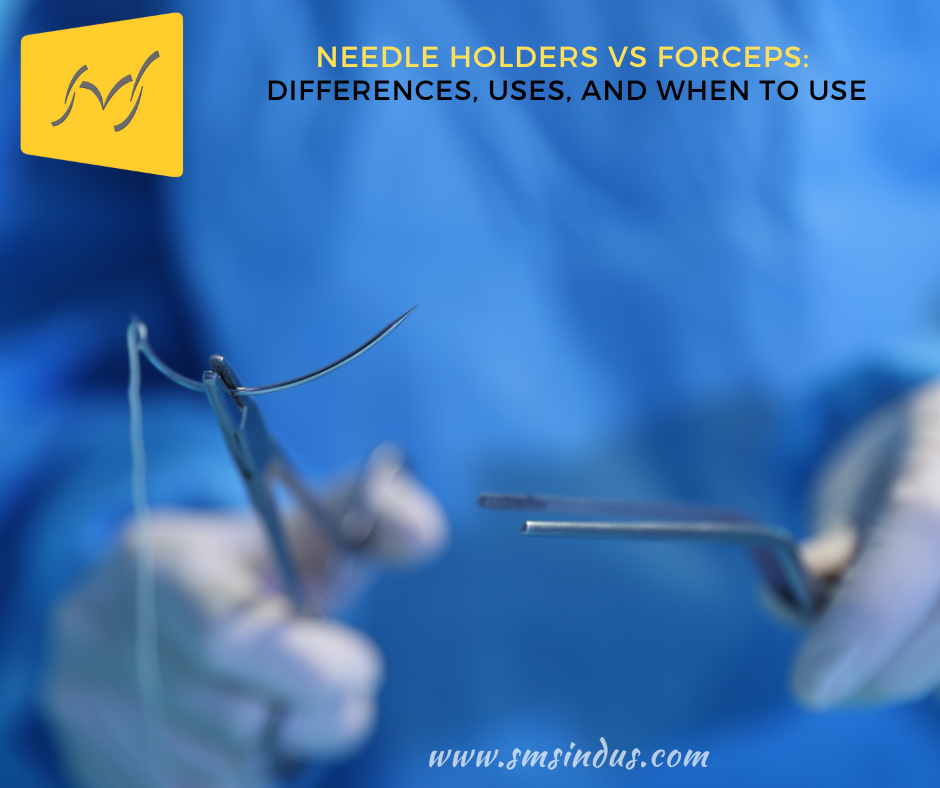
In the world of surgery and medical procedures, precision, control, and reliability are non-negotiable. Whether you are a surgeon, dentist, nurse, or medical student, understanding the difference between needle holders and forceps is essential for efficiency, safety, and optimal patient care. At NAZMED SMS SDN BHD, a leading supplier of surgical medical supplies in Malaysia, we understand that the right surgical instruments can make a dramatic difference in the outcome of any procedure.
From delicate dental surgeries to complex open-heart procedures, the proper selection of instruments is crucial. This comprehensive guide will walk you through the key differences between needle holders and forceps, their uses, and practical advice on when and why to use each instrument. By the end of this article, you will be equipped to make informed decisions when choosing quality surgical instruments, ensuring precision, efficiency, and patient safety.
Understanding Surgical Instruments: The Foundation of Precision
Before diving into the specifics, it is important to understand the role of surgical instruments in modern medicine. Instruments like needle holders and forceps are not merely tools—they are extensions of a surgeon’s hand, designed to enhance dexterity, grip, and control during complex procedures.
NAZMED SMS SDN BHD, renowned for its SMS brand of surgical medical supplies, offers a wide range of instruments that are trusted across Malaysia and Southeast Asia. By focusing on quality, precision, and durability, we ensure that every surgical instrument meets international standards for performance and safety.
Why it matters: Using the wrong instrument can compromise surgery outcomes, cause unnecessary tissue damage, or lead to longer recovery times. Choosing between a needle holder and a forceps is not just a matter of preference—it is a matter of surgical success.
What is a Needle Holder?
A needle holder, sometimes called a needle driver, is a specialized surgical instrument designed to hold and manipulate a suturing needle during the process of stitching tissue. Unlike regular forceps, needle holders are engineered to securely grip the needle without slipping, allowing surgeons to make precise stitches even in tight or delicate areas.
Key Features of Needle Holders:
- Serrated Jaws: The inner surface has fine serrations to securely grip the needle.
- Ratchet Locking Mechanism: Allows the surgeon to lock the needle in place, reducing hand fatigue during prolonged procedures.
- Variety of Sizes: Needle holders come in different sizes to accommodate different needles and tissue types.
- Material Quality: High-grade stainless steel ensures durability, corrosion resistance, and smooth operation.
Applications in Surgery:
- Suturing wounds in general surgery, orthopedic surgery, and cardiac procedures.
- Dental surgeries where precision is critical for stitching gum tissue.
- Microsurgeries where controlling small needles is crucial.
Pro Tip: Using a high-quality needle holder from NAZMED SMS SDN BHD ensures minimal needle slippage, reducing tissue trauma and improving healing outcomes.
What is a Forceps?
Forceps are a versatile surgical instrument used primarily for grasping, holding, or manipulating tissues and other materials. Unlike needle holders, forceps are generally not used for suturing, though they can be used to handle needles in some cases.
Types of Forceps:
- Tissue Forceps: Designed to hold and manipulate delicate tissues without causing damage.
- Hemostatic Forceps: Used to control bleeding by clamping blood vessels.
- Thumb Forceps: Used for picking up small objects, removing debris, or assisting in suturing.
Key Features of Forceps:
- Serrated or Smooth Tips: Depending on whether they are designed to hold tissue gently or provide a firm grip.
- Variety in Shapes and Lengths: To access different areas of the body.
- Non-locking Design: Most forceps do not have a ratchet mechanism, allowing for quick and flexible use.
Applications in Surgery:
- Holding tissues during suturing or dissection.
- Removing foreign objects from wounds.
- Controlling small blood vessels in minor surgeries.
- Assisting in dental procedures such as tooth extractions and soft tissue management.
Pro Tip: Using precision forceps from SMS Surgical Instruments ensures optimal control and reduces the risk of tissue damage, particularly in sensitive areas like oral cavities or microsurgical fields.
Needle Holders vs Forceps: Key Differences
| Feature | Needle Holder | Forceps |
| Primary Use | Holding and driving suturing needles | Grasping, holding, or manipulating tissues |
| Tip Design | Serrated jaws for needle grip | Smooth or serrated tips depending on type |
| Locking Mechanism | Ratchet lock available | Usually non-locking |
| Ideal For | Suturing, precise needle control | Tissue handling, minor hemostasis, debris removal |
| Common Usage | Surgery, dental sutures, microsurgery | Surgery, dental procedures, general handling |
Understanding these differences is critical. Choosing the wrong instrument can increase surgery time, damage tissues, or lead to poor wound healing. At NAZMED SMS SDN BHD, our SMS brand instruments are designed to ensure that every surgeon and medical professional can perform their procedures with confidence and precision.
When to Use Needle Holders
A needle holder is your go-to instrument whenever suturing is involved. Here’s a breakdown of the most common scenarios:
- General Surgery: Closing incisions, tying knots, and stitching deep tissue.
- Dental Procedures: Suturing gum tissue after extractions or periodontal surgery.
- Microsurgery: Delicate stitching in ophthalmology or reconstructive procedures.
- Emergency Trauma: Precise suturing in wound management to reduce scarring and infection risk.
Action Tip: Always match the needle holder size to the needle size and tissue type. Using a small needle holder for large needles can compromise control, while using a large needle holder for fine tissue can cause unnecessary trauma.
When to Use Forceps
Forceps are indispensable for grasping, holding, and manipulating tissues. Situations include:
- Tissue Handling: When exposing an area for suturing or dissection.
- Hemostasis: Clamping small blood vessels to control bleeding.
- Foreign Body Removal: Extracting debris or objects from wounds or surgical sites.
- Assisting Suturing: Holding tissue in place while another instrument drives the needle.
Action Tip: Ensure forceps are properly sterilized and in excellent condition. SMS Surgical Instruments Malaysia provides a full range of forceps suitable for different surgical specialties.
Choosing Between Needle Holders and Forceps: A Surgical Perspective
- Consider the Procedure: Suturing always calls for a needle holder, while tissue manipulation may require forceps.
- Precision Needs: Needle holders allow precise control over the needle trajectory. Forceps provide versatile tissue handling but limited suturing control.
- Tissue Sensitivity: Forceps can damage delicate tissue if not chosen carefully. Needle holders prevent slippage, reducing unnecessary trauma.
- Ergonomics and Comfort: High-quality instruments reduce fatigue. NAZMED SMS SDN BHD ensures ergonomic designs for prolonged procedures.
Pro Insight: Many experienced surgeons carry both instruments simultaneously. Mastering both ensures faster, safer, and more effective procedures.
The NAZMED SMS SDN BHD Advantage
At NAZMED SMS SDN BHD, we are not just suppliers; we are partners in surgical excellence. Our SMS brand of surgical medical supplies includes:
- Needle Holders: From small dental sizes to heavy-duty surgical models.
- Forceps: Including tissue, hemostatic, and thumb forceps for various specialties.
- Dental Instruments Malaysia: Precision tools designed for oral surgery.
- Medical Products Malaysia: Comprehensive solutions for hospitals, clinics, and dental offices.
Why choose SMS brand instruments?
- Premium stainless steel for durability and corrosion resistance.
- Ergonomically designed handles for reduced hand fatigue.
- Precision-engineered tips for flawless performance.
- Trusted across hospitals, dental clinics, and surgical centers in Malaysia.
Customer Assurance: All instruments are sterilizable, compliant with ISO standards, and designed for long-lasting performance.
Practical Tips for Medical Professionals
- Regular Maintenance: Clean and sterilize instruments after every procedure to maintain sharpness and precision.
- Inspect Before Use: Check the alignment of needle holders and the tips of forceps to ensure optimal grip.
- Match Instrument to Procedure: Avoid improvising; using the wrong tool can compromise patient safety.
- Invest in Quality: High-grade instruments from SMS Surgical Instruments Malaysia save time, improve outcomes, and enhance professional reputation.
Final Thoughts: Precision Matters
In surgery, every second and every movement counts. The choice between needle holders and forceps may seem simple, but it can significantly impact patient outcomes. By understanding the differences, uses, and correct scenarios for each instrument, medical professionals can perform procedures more efficiently, reduce tissue trauma, and ensure faster recovery.
NAZMED SMS SDN BHD is proud to supply high-quality surgical instruments that meet the exacting standards of surgeons, dentists, and medical teams across Malaysia. Whether you are performing complex surgeries or routine dental procedures, choosing the right instrument is the first step toward excellence.
Need More Information?
Visit our website: www.smsindus.com
Email us: sales@smsindus.com
Call us: +60-3-8024 4401