



In short: dissecting forceps are used to hold tissue while it is cut or sutured, to handle needles and sutures, to hold dressings and swabs, and to pick up small objects. Which pattern is used depends on the task: toothed tips for skin and tougher tissue, serrated or smooth tips for dressings and delicate tissue, and fine points for small objects.
For types, patterns and ranges, see our guide to dissecting forceps.

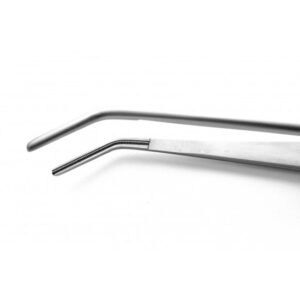
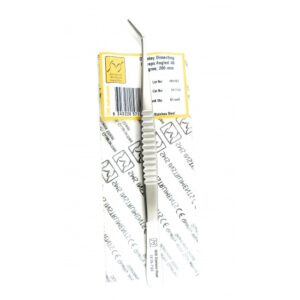
Holding tissue during dissection and suturing
The forceps are held in the non-dominant hand to steady or lift tissue while the other hand cuts or sutures. Toothed forceps grip skin and tougher tissue with little pressure. Non-toothed and atraumatic forceps are used where teeth would damage the tissue. Our product pages describe Lane tissue forceps as used for holding tough tissue such as fascia, and Adson forceps as made for holding and manipulating delicate tissue.
Handling needles and sutures
During suturing, dissecting forceps steady the tissue edge and pick up the needle as it emerges, so that the needle holder can regrasp it. For the instrument that drives the needle, see our guide to needle holders.
Handling dressings, swabs and packing
Serrated dressing forceps hold gauze and cotton so that they are not handled with the fingers. Our product pages describe standard dissecting forceps as dressing forceps used for holding dressing materials during procedures, changing dressings and packing wounds. See dissecting forceps in wound care.
Removing small objects
Fine-pointed patterns are made for grasping small objects. Splinter forceps (80 mm) and Feilchenfeld splinter forceps (75, 95 and 115 mm) are listed for this purpose. For first aid use, see using dissecting forceps in first aid.
Fine and specialty work
- Vascular and delicate tissue: DeBakey atraumatic forceps, listed with straight or angled jaws.
- Ear and nose: angled and bayonet-shaped patterns keep the hand out of the line of sight; see Ear Dressing and Tissue Forceps.
- Eye: short, fine patterns; see Ophthalmic Forceps.
- Dental: see dissecting forceps and tweezers in dentistry.
Which tip for which task
| Task | Tip | Example listing |
|---|---|---|
| Holding skin edges or tougher tissue | Toothed (1×2 or more) | Standard tissue forceps |
| Holding delicate tissue | Fine toothed, serrated or atraumatic | Gillies forceps |
| Holding dressings and swabs | Serrated, non-toothed | Semken dissecting forceps |
| Removing small objects | Fine pointed, serrated | Splinter forceps |
For the difference between the two main types, see tissue forceps vs dressing forceps.
What dissecting forceps are not used for
- Clamping vessels: they have no lock. Haemostatic forceps do this; see our guide to haemostats and artery forceps.
- Driving a needle: a needle holder is made for this.
Frequently asked questions
What are dissecting forceps used for in surgery?
They hold and steady tissue during dissection and suturing, and they pick up needles, sutures, swabs and other small items.
Which hand holds the dissecting forceps?
Usually the non-dominant hand, so that the dominant hand is free to cut or suture.
Can dissecting forceps clamp a vessel?
No. They have no lock and grip only while squeezed. Haemostatic forceps are used for clamping.
Need dissecting forceps?
Browse the product ranges above or contact NAZMED SMS in Subang Jaya, Selangor, for a quotation: sales@smsindus.com or +60 3-8024 4401.