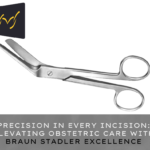



The atmosphere in a delivery room is a complex tapestry of intense emotion, clinical focus, and rapid transitions. Amidst the culmination of months of anticipation, there is a singular, defining moment that marks the physical separation of the newborn from the mother: the cutting of the umbilical cord. This act, symbolic and medically critical, requires tools that are not merely functional, but absolute in their reliability, safety, and precision.
Enter the Schumacher Umbilical Cord Scissors.
While to the untrained eye, they might appear as just another pair of medical scissors on a sterile tray, to obstetricians, midwives, and surgical staff, the Schumacher design represents the gold standard for this specific procedure.
This comprehensive guide will journey deep into the world of this essential instrument. We will explore why its specific design is crucial for navigating the unique anatomy of the umbilical cord, the materials science that defines “quality instruments,” the rigorous protocols for sterilization, and the landscape of sourcing high-grade surgical medical supplies in markets like Malaysia. Whether you are a medical professional, a procurement officer for a hospital, or a student of obstetrics, this definitive resource is designed to answer every conceivable question regarding the Schumacher Umbilical Cord Scissor.
The Critical Moment: Understanding the Context of Cord Cutting
To truly appreciate the engineering of the Schumacher scissor, one must first understand the environment in which it operates. The cutting of the umbilical cord isn’t just snipping a piece of string; it is a surgical intervention performed on living tissue during a highly dynamic clinical scenario.
The Anatomy of the Umbilical Cord
The umbilical cord is a marvel of biological engineering. It is not a simple tube. It typically contains two arteries and one vein, responsible for transporting oxygen and nutrients to the fetus and removing waste products. These vessels are encased in Wharton’s jelly, a gelatinous substance comprised largely of mucopolysaccharides.
Wharton’s jelly is the key challenge for any cutting instrument. Its purpose is to protect the blood vessels from compression and torsion during pregnancy. However, its slippery, durable consistency makes the cord notoriously difficult to grip and cut cleanly. A standard pair of operating scissors would likely compress the cord, allowing it to slip out from between the blades before a cut can be completed. This slipping can lead to jagged cuts, incomplete separation, or, in worst-case scenarios, injury to the surrounding tissues of the neonate’s abdomen.
The Stakes of the Procedure
The severance of the cord needs to be clean and efficient for several reasons:
-
Hemostasis: While clamps are applied before cutting, a clean cut facilitates better management of the cord stump.
-
Infection Control: A jagged or crushed cord stump can potentially offer a larger surface area for bacterial colonization, raising the risk of omphalitis (infection of the umbilical stump).
-
Speed and Efficiency: In emergency situations or complicated births, every second counts. The clinician needs an instrument that works the first time, every time, without struggle.
-
Safety: The proximity of the cut to the newborn’s abdomen means that the instrument must be inherently safe, with zero risk of inadvertent puncture with the tips.
It is against this backdrop of slippery anatomy and high clinical stakes that the Schumacher Umbilical Cord Scissor was developed.
Deconstructing the Schumacher Umbilical Cord Scissor
The Schumacher scissor is a triumph of form following function. Every curve, angle, and edge has been specifically specifically specifically specifically designed to address the challenges posed by the umbilical cord.
The Signature Curved Blades
The most defining characteristic of the Schumacher scissor is the pronounced curve of its blades. This is not an aesthetic choice.
When an obstetrician or midwife approaches the umbilical cord, which has been clamped near the neonate’s abdomen, a straight scissor would require an awkward angle of attack, potentially forcing the user’s hand into an uncomfortable position or obscuring the view of the cutting site.
The curved blades allow the scissor to approach the cord naturally, conforming to the contour of the neonate’s rounded abdomen without the instrument itself pressing against the skin. The curve also improves visibility, allowing the clinician to see exactly where the blades are engaging the tissue.
The Blade Profile: Grip and Cut
As mentioned, Wharton’s jelly makes the cord slippery. The blades of a high-quality Schumacher scissor—such as those found among reputable surgical instruments Malaysia suppliers like the sms brand—are engineered to counteract this.
The blades are typically robust and wider than standard tissue scissors. This added surface area helps to stabilize the cord. More importantly, the cutting action is designed to exert a “capture and shear” force. Instead of pushing the tissue away as they close (which happens with dull or poorly designed scissors), the Schumacher blades are meant to trap the cord between them before the shearing action begins, ensuring a clean transection in a single motion.
Blunt, Rounded Tips
Perhaps the most critical safety feature is the tips of the scissors. They are deliberately blunt, rounded, and smooth.
In the flurry of activity during delivery, the neonate may move, or space may be tight. Pointed scissors would pose an unacceptable risk of puncturing the neonate’s delicate abdominal skin or injuring the mother. The blunt nose of the Schumacher scissor allows the clinician to maneuver the instrument confidently, knowing that even if the tip inadvertently touches surrounding tissue, it is unlikely to cause trauma.
The Pivot Point and Screw Joint
The fulcrum, or pivot point, is the heart of any scissor. In professional-grade obstetric instruments, this is usually a precision-engineered screw joint rather than a simple riveted pin.
A high-quality screw joint ensures consistent tension between the blades. If the tension is too loose, the blades will splay apart when cutting tough tissue like a thick umbilical cord, causing the cord to fold rather than cut. If it’s too tight, the scissor is difficult to operate, causing hand fatigue.
Premium surgical medical supplies feature screw joints that maintain optimal tension over hundreds of uses and sterilization cycles, ensuring the shearing edges meet perfectly every time.
Materials Science: The Foundation of Quality Instruments
When sourcing medical products Malaysia, particularly surgical tools, the underlying material determines performance, longevity, and safety. Not all stainless steel is created equal.
Surgical Grade Stainless Steel
Schumacher Umbilical Cord Scissors must be manufactured from high-grade surgical stainless steel. This is typically a martensitic stainless steel, known for its ability to be heat-treated to a high hardness level while maintaining reasonable corrosion resistance.
The specific alloy composition is crucial. It needs enough carbon to allow for hardening (so the edges stay sharp) and enough chromium to resist rust.
The Importance of Passivation
In the context of obstetrics, instruments are exposed to blood, amniotic fluid, and saline solutions—all highly corrosive agents. Furthermore, the rigorous steam sterilization (autoclaving) process induces a harsh environment.
Quality instruments undergo a process called passivation. After the scissor is manufactured and polished, it is treated with an acid solution (usually nitric or citric acid). This process removes free iron from the surface of the steel and enhances the natural formation of a passive chromium oxide layer. This invisible layer is what actually protects the steel from rusting.
When hospitals buy cheap, non-passivated instruments, they often find spotting and rust appearing after only a few uses, compromising sterility and necessitating costly replacements. This is why reputable suppliers of surgical instruments Malaysia, such as NAZMED SMS SDN BHD, emphasize the metallurgical quality of their sms brand tools.
Hardness and Tempering
The steel must be tempered (heat-treated) to a specific range on the Rockwell Hardness scale. If the steel is too soft, the cutting edge will dull almost immediately upon cutting tough cord tissue. If it is too brittle, the blades could chip or snap under stress. Achieving this perfect balance is the mark of a master instrument maker.
The Manufacturing Journey of a Schumacher Scissor
Understanding the manufacturing process helps procurement officers appreciate the difference between a $10 instrument and a professional-grade tool.
Forging
The best surgical scissors start as a forging. A raw blank of stainless steel is heated to extreme temperatures and hammered into the rough shape of the scissor half. Forging aligns the grain structure of the metal, imparting superior strength and durability compared to instruments that are simply stamped out of a sheet of metal.
Milling and Grinding
Once forged, the blanks undergo precise milling to define the complex geometry of the joint area, the finger rings, and the curved blades. Grinding is a multi-stage process, moving from coarse abrasives to fine ones, shaping the blades to their final profile and creating the preliminary cutting edge.
Heat Treatment
The scissor halves are subjected to precise heating and cooling cycles to achieve the desired temper. This is a critical step that locks in the metal’s mechanical properties.
Fitting and Assembly
This is where craftsmanship enters the picture. A skilled technician must manually fit the two halves together. They adjust the screw joint for perfect tension and ensure the blades glide smoothly against each other from the pivot to the tip. This “ride” is essential for the shearing action.
Final Sharpening and Polishing
The edges are honed to razor sharpness. The entire instrument is then polished to a mirror or satin finish. A highly polished surface is not just for looks; it provides fewer microscopic crevices for bioburden to adhere to, making cleaning and sterilization more effective.
Quality Control
Before being packaged as quality instruments, they undergo rigorous testing. They must cut multiple layers of standardized test material cleanly at the very tip. The hinges are checked for smoothness, and the surfaces inspected for any imperfections.
Clinical Application: Using the Schumacher Scissor
For the medical student or new midwife, understanding the correct usage of the Schumacher scissor is paramount to a smooth delivery process.
Preparation and Setup
The Schumacher scissor is part of the standard delivery instrument set. It should be inspected before the delivery begins. The user should check that the action is smooth and that there is no visible damage or corrosion.
The Procedure (Standard Cord Clamping)
-
Delivery of the Neonate: The baby is delivered and placed on the mother’s abdomen or a radiant warmer, depending on the clinical situation and delayed cord clamping protocols.
-
Clamping: Two umbilical clamps (typically plastic, disposable clamps) are applied to the cord. The first is placed a few centimeters from the neonate’s abdomen, and the second is placed a few centimeters further down the cord toward the placenta.
-
The Cut: The area between the two clamps is identified. The clinician takes the Schumacher Umbilical Cord Scissors.
-
Grip: The scissors should be held with the thumb and ring finger in the loops, with the index finger resting on the shank for stability and control.
-
Approach: The curved blades are angled so the curve follows the contour away from the neonate’s skin.
-
Engagement: The open blades are placed around the cord between the two clamps.
-
Execution: With a firm, steady action, the scissors are closed. The design of the blades should ensure the slippery cord is trapped and sheared cleanly in one cut.
-
Difficult Cords
Occasionally, cords can be exceptionally thick or edematous. In these cases, the superior leverage and sharp edges of a high-quality Schumacher scissor are even more critical. A substandard instrument might require multiple gnawing attempts to sever the cord, which is professionally undesirable and potentially unsafe.
Maintenance, Sterilization, and Longevity
A Schumacher scissor is a reusable asset. Its lifespan is directly dependent on how it is cared for. In busy hospitals ordering surgical medical supplies, instrument reprocessing is a massive logistical operation.
Cleaning (Decontamination)
Immediately after use, the scissors should not be allowed to let blood or tissues dry on them. They should be rinsed or placed in an enzymatic soak. Manual cleaning with a soft brush (never metal wool) is necessary to remove visible bioburden, especially around the screw joint.
For facilities with automated washer-disinfectors, the scissors must be placed in the tray in an open position. If closed, the area between the blades will not be cleaned, and sterilization will fail.
Inspection and Lubrication
Before sterilization, every scissor must be inspected.
-
Are the edges still sharp?
-
Is the joint loose?
-
Is there any sign of pitting or rust?
Crucially, surgical instruments with moving parts need lubrication. A special, steam-permeable, water-soluble surgical instrument milk/lubricant should be applied to the hinge area. This prevents friction wear during use and helps protect the joint during the harsh autoclaving cycle.
Sterilization (Autoclaving)
The standard method for sterilizing stainless steel instruments is moist heat under pressure (autoclaving). The Schumacher scissors, being all steel, are perfectly suited for this.
They must be sterilized in the open position. If sterilized closed, the steam may not reach the surfaces where the blades touch, and thermal expansion during the cycle could cause stress fractures at the hinge.
The Cost of Poor Maintenance
Failure to clean properly leads to baked-on bioburden, which causes corrosion under the soil. Failure to lubricate leads to stiff joints and eventually breakage. Hospitals that invest in quality instruments but skimp on reprocessing protocols will not realize the value of their investment.
The Landscape of Surgical Instruments in Malaysia
The Malaysian healthcare sector is rapidly advancing, demanding higher standards for medical products Malaysia. The sourcing of surgical instruments is a critical component of this ecosystem.
The Challenge of Sourcing
Hospital procurement departments face a barrage of options. The market is flooded with instruments varying wildly in price and quality. Distinguishing between a genuine surgical-grade instrument and a visually identical but metallurgically inferior copy is difficult without expertise.
The Role of Reputable Suppliers
This is where established suppliers like NAZMED SMS SDN BHD play a vital role. By curating portfolios that include trusted brands like the sms brand, they provide a layer of quality assurance for healthcare providers.
A reputable supplier ensures:
-
Traceability: Knowing exactly where the steel came from and where the forging took place.
-
Compliance: Ensuring instruments meet international standards like ISO 13485 for medical devices.
-
Support: Providing guidance on maintenance and handling warranty claims.
While a hospital might also be sourcing dental instruments Malaysia or general ward supplies, the philosophy of purchasing quality remains the same. In critical care areas like obstetrics, cutting corners on instrument quality is a false economy that can impact patient safety.
Alternatives and Future Directions
While the Schumacher scissor is the standard, it is not the only method for cord division.
Scalpels
Some clinicians may use a scalpel to cut the cord against a firm surface. While effective, this requires a different technique and carries a higher risk of sharps injury if the neonate moves unexpectedly. The scissor action is generally considered safer and more controlled in the typical delivery room setting.
Integrated Clamp-Cut Devices
Modern disposable devices exist that combine the clamping and cutting action into one plastic tool. While convenient and eliminating reprocessing costs, they contribute to medical waste. Furthermore, many clinicians still prefer the tactile feedback and control of traditional steel scissors, reserving the Schumacher as the preferred tool for its reliability.
Conclusion: The Unsung Hero of Delivery
The Schumacher Umbilical Cord Scissor is a testament to specialized engineering. It is a tool born from the specific, demanding requirements of childbirth. Its curved geometry, blunt safety tips, and robust shearing capability make it uniquely suited for severing the physical bond between mother and child safely and efficiently.
For healthcare institutions, understanding the value of this instrument goes beyond its price tag. It involves recognizing the importance of materials science, the artistry of manufacturing, and the necessity of rigorous maintenance protocols. When sourced from reliable providers of surgical medical supplies, the Schumacher scissor is not just a piece of metal; it is a reliable partner in the miracle of birth, ensuring that the very first independent moment of a new life is marked by precision and safety.
In the realm of high-quality surgical instruments, brand reputation is built on consistent performance and metallurgical integrity. Brands such as the SMS brand (www.smsindus.com), Relpro Brand (www.relprosurgical.com), and nopa Brand (https://www.nopa-instruments.eu/en/home) have established themselves as trusted names in the industry, recognized by healthcare professionals for delivering tools that meet the rigorous demands of modern surgical and obstetric care.