

In the world of ophthalmology, where the margin for error is measured in microns, the adult eye speculum stands as a foundational pillar of success. Often referred to by surgeons as the “silent partner” in the operating theater, this instrument—formally known as a blepharostat—is far more than a simple device to keep the eye open. It is a masterpiece of surgical engineering designed to balance two competing needs: maximum visibility for the surgeon and minimal trauma for the patient.
As we move into 2026, the landscape of surgical medical supplies has evolved. Providers like NAZMED SMS SDN BHD have set new benchmarks for what “quality instruments” truly mean in a clinical setting. Whether you are a procurement officer for a major hospital in Kuala Lumpur or a vitreoretinal surgeon in London, understanding the nuances of the adult eye speculum is essential for optimizing patient care.
The Anatomy of an Adult Eye Speculum: Beyond the Wire
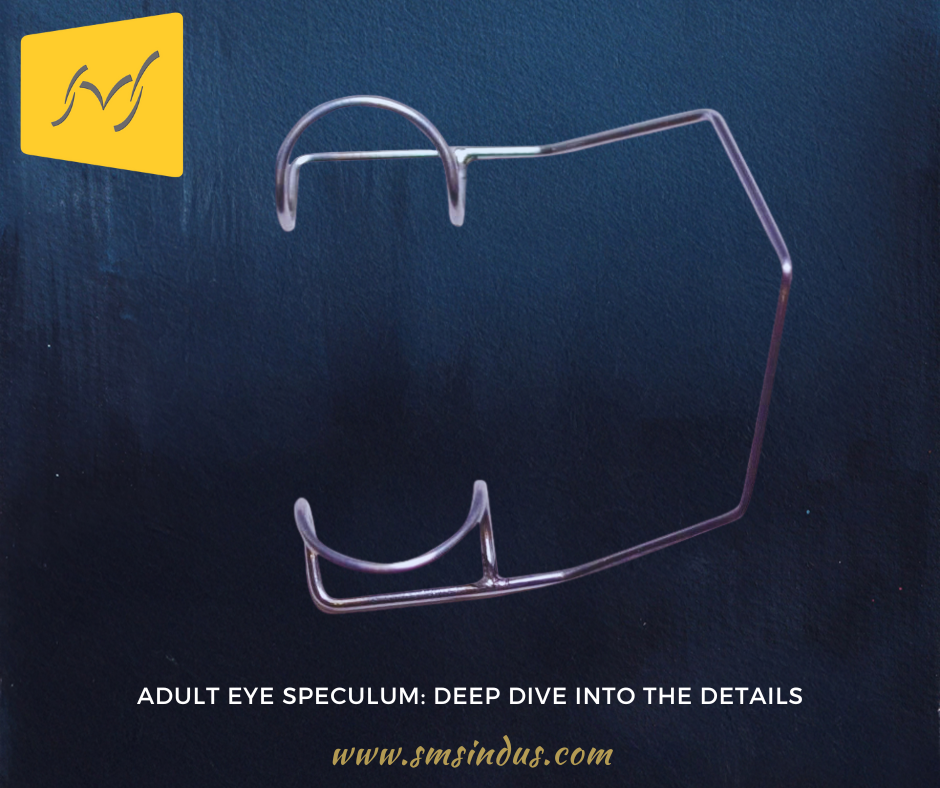
To the untrained eye, a speculum might look like a simple piece of bent wire. However, a deep dive into its construction reveals a sophisticated design intended to manage the complex biomechanics of the human eyelid.
The Blade Architecture
The blades are the point of contact between the instrument and the patient. In adult models, these are typically wider and more robust than pediatric versions to account for the increased tension of the adult orbicularis oculi muscle.
- Open Wire Blades: These are favored for their “minimalist” footprint. By using thin, high-tensile wire, they allow for maximum exposure of the globe and the limbus, which is critical during cataract surgery.
- Solid Blades: Solid blades provide a physical barrier. They prevent eyelashes and lid margin secretions from entering the surgical field, which is a vital consideration in endophthalmitis prophylaxis.
The Bridge and Adjustment Mechanism
The “bridge” is the part of the speculum that sits outside the eye. Depending on the design, this may be a simple spring-tension bridge or a sophisticated screw-adjustment mechanism.
- Spring Tension: Found in the classic Barraquer models. It relies on the inherent “memory” of the metal to provide constant, gentle outward pressure.
- Screw-Driven: Found in the Lieberman or Cook styles. These allow the surgeon to precisely dial in the amount of retraction, which is particularly useful for patients with tight lids or deep-set orbits.
Historical Evolution: From Ancient Hooks to the SMS Brand
The history of the eye speculum is a journey from blunt force to surgical finesse. Early records from the Roman era describe the use of metal hooks held by assistants to keep the lids apart—a method that was both painful and prone to inconsistency.
By the 19th century, the first “self-retaining” specula began to appear. These early models were often bulky and made of materials that were difficult to sterilize effectively. The turning point came with the introduction of high-grade stainless steel and the refined “wire” designs popularized by Dr. Ignacio Barraquer.
Today, companies like NAZMED SMS SDN BHD have refined these historical designs using modern metallurgy. The sms brand represents the culmination of centuries of feedback, offering instruments that are not only effective but also highly durable and resistant to the rigors of modern autoclaving.
Categorizing Adult Eye Specula: The Professional’s Taxonomy
When selecting from a catalog of surgical instruments Malaysia, it helps to understand the four primary categories of adult specula.
A. Based on Mechanical Action
| Type | Mechanism | Primary Advantage |
| Fixed/Spring | Constant tension | Speed of application; lightweight. |
| Adjustable Screw | Precision dial | Controlled retraction; no “spring-back” risk. |
| Locking | Ratchet or nut | Maximum security for heavy-duty retraction. |
B. Based on Blade Design
- Fenestrated Blades: These have “windows” or openings. They are the standard for most cataract procedures because they offer a balance of lid control and visibility.
- Solid Blades: Often used in procedures where the lid margin must be completely isolated, such as when dealing with ocular surface infections or extensive trauma.
C. Based on Material
- Stainless Steel: The workhorse of the industry. It offers the best balance of cost-efficiency and durability.
- Titanium: Preferred for its ultra-light weight and non-magnetic properties. It is often the choice for surgeons who perform long, intricate micro-surgical procedures where every gram of weight matters.
Key Models Every Surgeon Should Know
Deepening our dive, we must look at the specific models that have defined the field.
The Barraquer Wire Speculum
The Barraquer is the most widely used eye speculum in the world. Its elegance lies in its simplicity. By utilizing a single loop of high-quality wire, it provides enough tension to hold the lids apart while remaining remarkably unobtrusive.
- Clinical Insight: It is the “gold standard” for intravitreal injections and routine cataract surgery.
The Lieberman Speculum
The Lieberman (often referred to as the Lieberman-Kratz) features a V-shaped wire design and a micro-screw adjustment. This model is essential when the surgeon needs to “over-retract” slightly to gain access to a specific quadrant of the eye.
- Why surgeons love it: It stays exactly where you put it. There is no risk of the speculum “jumping” out of the eye if the patient squeezes.
The Cook Eye Speculum
Named after the surgeon who popularized it, the Cook speculum features solid blades and a large, easy-to-turn screw. It is often the instrument of choice for more “aggressive” retraction, such as in cases of enucleation or repair of complex lid lacerations.
Material Science in Ophthalmic Instruments
The quality of a speculum is only as good as the metal it is forged from. In the realm of medical products Malaysia, there is a significant difference between “surgical grade” and “premium grade.”
The Role of 304 vs. 420 Stainless Steel
Most high-quality adult eye specula are made from martensitic stainless steel. This alloy provides the necessary hardness to maintain the “spring” of the wire while being soft enough to be polished to a mirror or matte finish.
- Passivation: This is a chemical process that removes “free iron” from the surface of the instrument, creating a protective chromium oxide layer. Without proper passivation, a speculum will rust after just a few cycles in the autoclave.
- The SMS Standard: The sms brand employs advanced passivation techniques to ensure their quality instruments last for years, even in high-volume clinics.
Titanium: The Aerospace Influence
For surgeons seeking the pinnacle of performance, titanium specula offer a “warm” feel and a weight reduction of nearly 40% compared to steel. Furthermore, titanium is naturally resistant to the corrosive effects of saline, which is a constant presence in eye surgery.
Clinical Applications: A Comprehensive Guide
An adult eye speculum is not a “one size fits all” tool. Different procedures demand different mechanical properties.
Cataract Surgery (Phacoemulsification)
In modern phacoemulsification, the speculum must provide a stable field for the microscope. A wire speculum (like the Kratz-Barraquer) is usually preferred because it doesn’t interfere with the infusion lines or the phaco probe.
LASIK and Refractive Surgery
Refractive surgery requires a very specific type of speculum. Because the microkeratome or femtosecond laser must have a clear path to the cornea, the speculum must be “low profile.” Many surgeons use a solid-blade speculum here to ensure that no stray lashes interfere with the suction ring of the laser.
Intravitreal Injections
With the rise of Anti-VEGF treatments for macular degeneration, the use of specula for injections has skyrocketed. In these settings, speed and patient comfort are paramount. A small, lightweight Barraquer wire speculum is typically the best choice.
Ocular Trauma and Emergency
In the ER, an adult eye speculum is often used to examine a “chemotic” or swollen eye after an injury. In these cases, a Desmarres Lid Retractor (a hand-held cousin of the speculum) or a heavy-duty screw speculum is needed to overcome the intense swelling of the lids.
The Malaysian Advantage: Why Source from NAZMED SMS SDN BHD?
Malaysia has emerged as a global hub for the manufacturing of high-precision medical devices. When searching for surgical instruments Malaysia or dental instruments Malaysia, professionals are increasingly turning to local manufacturers who meet international standards.
Compliance and Quality Control
NAZMED SMS SDN BHD operates under strict ISO 13485 certifications. This means every adult eye speculum produced is:
- Traceable: Every batch of steel is tracked from the mill to the finished product.
- Validated: The dimensions are checked against master templates to ensure consistency.
- Clinically Safe: The instruments are designed to be “atraumatic,” meaning they have rounded edges and polished surfaces that won’t scratch the cornea.
By choosing a local leader like NAZMED SMS, hospitals can reduce their supply chain costs without compromising on the “German-quality” feel that surgeons expect.
Patient Comfort and Safety: The Surgeon’s Responsibility
Using an adult eye speculum is an art. If applied too tightly, it can cause “post-operative ptosis” (drooping of the eyelid) or corneal abrasions.
Tips for Atraumatic Application
- Lubrication: Always apply a drop of topical anesthetic and perhaps a small amount of ophthalmic lubricant to the lid margins before inserting the speculum.
- Centering: Ensure the speculum is centered on the globe. If it is canted to one side, it will apply uneven pressure, leading to patient discomfort.
- Monitoring Tension: If using a screw-type speculum, open it only as much as necessary. “Maxing out” the retraction can lead to bruising of the delicate lid tissues.
Maintenance, Cleaning, and Sterilization Protocols
Even the best quality instruments will fail if not maintained properly. Ophthalmic instruments are particularly delicate because they are small and have intricate hinges.
The Cleaning Process
- Immediate Rinse: After surgery, rinse the speculum with distilled water to remove viscoelastic and blood. Never let saline dry on the instrument, as the salt crystals can cause pitting.
- Ultrasonic Cleaning: Use an ultrasonic bath with a pH-neutral detergent. This is the only way to remove debris from the threads of a screw speculum.
- Inspection: Use a magnifying glass to check for any signs of “burrs” or sharp edges on the blades.
Sterilization
Most adult eye specula are designed for steam sterilization (autoclaving).
- Temperature: Standard cycles of 134°C are usually sufficient.
- Storage: Store specula in dedicated trays or silicone mats to prevent the wires from being bent or crushed by heavier instruments like needle holders.
The Future of the Adult Eye Speculum: Trends for 2026 and Beyond
As we look toward the future, the adult eye speculum is undergoing a digital and material revolution.
- Single-Use vs. Reusable: There is a growing debate about the environmental impact vs. the infection-control benefits of disposable specula. While the sms brand focuses on high-quality reusables, the industry is seeing a rise in “premium disposables” for high-risk cases.
- Robotic Integration: With the rise of robotic-assisted eye surgery, new specula are being designed that can communicate with the robotic arms, automatically adjusting tension to compensate for patient movement.
- Ergonomic Enhancements: Newer models are featuring “scalloped” handles and matte finishes to reduce glare under the intense lights of the surgical microscope.
Conclusion: Precision Starts with the Right Tool
The adult eye speculum may be a small part of the surgical tray, but its impact on the success of an operation is immense. From providing the necessary exposure for a life-changing cataract surgery to ensuring the safety of a routine injection, this instrument is the silent guardian of the ocular surface.
In Malaysia and across the globe, the demand for surgical medical supplies that combine traditional craftsmanship with modern innovation has never been higher. By understanding the different types, materials, and maintenance requirements of the eye speculum, healthcare providers can ensure they are providing the highest standard of care. Whether you are looking for the durability of the sms brand, the precision of quality instruments, or the reliability of medical products Malaysia, the choice of speculum is a choice for patient safety.
For those seeking the highest caliber of ophthalmic and general surgical tools, we highly recommend exploring the specialized catalogs of industry leaders. The commitment to excellence seen in the SMS brand (available at www.smsindus.com), the innovative designs of the Relpro Brand (www.relprosurgical.com), and the world-renowned German engineering of nopa Brand (https://www.nopa-instruments.eu/en/home) ensures that your facility is equipped for the future of surgery.