

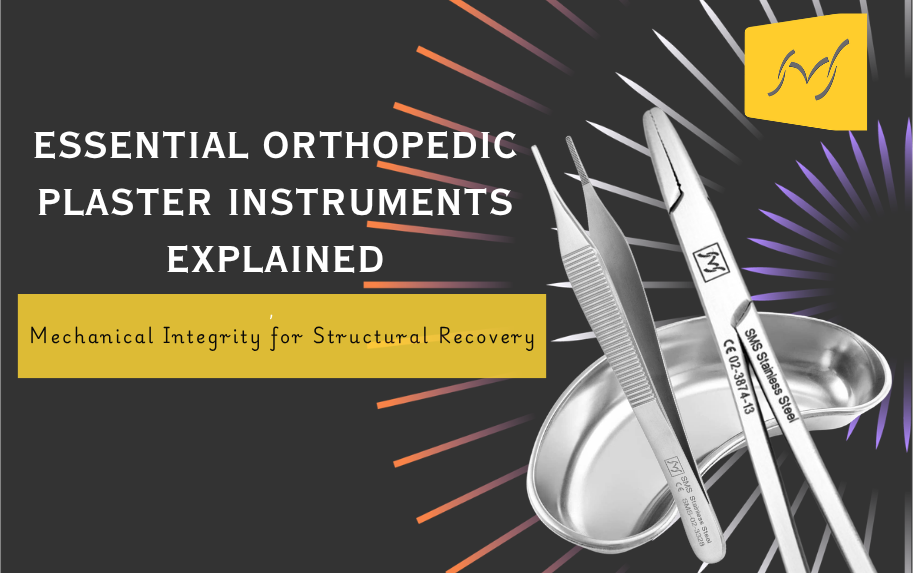
Essential Orthopedic Plaster Instruments Explained
In the field of musculoskeletal medicine, immobilization remains a fundamental principle for treating fractures, joint dislocations, and severe soft tissue injuries. While modern synthetic fiberglass casting materials have grown in popularity, traditional Plaster of Paris (PoP) and specialized multi-layer splints continue to serve as vital components within orthopedic trauma centers, emergency departments, and operating theaters worldwide.
Achieving a stable, anatomically aligned cast that avoids skin pressure necrosis, compartment syndrome, or structural failure depends on more than just the casting material itself. It requires a highly specialized orthopedic plaster set engineered to handle the high physical demands of bone immobilization.
For clinical procurement officers, theater managers, orthopedic surgeons, and medical supply distributors in Malaysia and across global healthcare supply chains, managing tools for cast application and removal involves balancing patient safety, tactile clinical ergonomics, and asset durability.
This technical guide provides an exhaustive breakdown of the specialized Abraham Plaster Set Instruments, creating a comprehensive resource for evaluating tool performance, structural engineering, and clinical utility.
1. Procedure Overview: Plaster Cast Application and Removal
To appreciate the design parameters of an Abraham plaster instrument set, one must first understand the detailed clinical steps involved in applying and removing external orthopedic immobilization devices.
Clinical Foundations of External Immobilization
The primary objective of an orthopedic cast or splint is to maintain stable bone alignment following non-operative reduction or post-surgical fixation. A properly constructed cast must counteract the muscular pulling forces that threaten to displace a fracture, while distributing external pressure evenly across the soft tissue of the limb.
In a typical clinical scenario, such as stabilizing a displaced bimalleolar ankle fracture or a Colles’ fracture of the distal radius, the application team must work quickly before the chemical setting reaction of the plaster is complete. The process involves multiple steps where specialized tools are needed to mold, adjust, trim, and eventually safely bivalve or remove the rigid cast structure.
Step-by-Step Cast Application Workflow
The clinical sequence requires precision to avoid creating localized pressure points over bony prominences:
- Skin Care and Stockinette Positioning: The skin is cleaned and inspected for open wounds. A tubular cotton stockinette is rolled smoothly over the extremity, ensuring there are no wrinkles that could cause friction blisters under the plaster.
- Soft Padding Layering: Webbing padding (cast padding) is wrapped circumferentially around the limb, overlapping each layer by 50%. Extra padding layers are added over vulnerable bony points, such as the olecranon, the ulnar styloid, the patella, or the malleoli.
- Plaster Activation and Lamination: Rolls of Plaster of Paris bandages are immersed in lukewarm water. An exothermic chemical reaction turns the calcium sulfate hemihydrate into a crystalline dihydrate form. The bandages are wrapped without tension, and the clinician constantly molds the wet material to mirror the patient’s anatomy.
- Trimming and Edging: Before the plaster fully hardens, the rough edges around functional joints (like the metacarpophalangeal joints or the toes) must be cleanly cut back. This is where specialized, non-slip trimming knives and heavy utility shears from the plaster cast application instruments set are required to create a smooth, comfortable border.
The Mechanics of Cast Removal and Bivalving
Removing a hardened cast or splitting it down the middle (“bivalving” to relieve internal pressure from acute swelling) requires heavy-duty tools that can slice through thick, reinforced plaster layers without cutting the patient’s skin underneath.
- Line Mapping: The surgeon marks the planned cutting lines down opposite sides of the cast, taking care to avoid running the lines directly over bony prominences.
- Shearing or Sawing: Using manual orthopedic shears (such as Stille or Henning shears) or an oscillating electric cast saw, the clinician cuts through the outer shell layer by layer.
- Spreading the Shell: Once the plaster shell is cut completely through down to the soft cotton padding layer, a heavy-duty mechanical cast spreader is inserted into the groove. Squeezing the handles forces the jaws outward, separating the rigid plaster halves so the soft inner padding can be safely cut away with bandage scissors.
2. Comprehensive Breakdown of Instruments Used
An optimized Abraham plaster set instruments kit contains a variety of highly durable, high-leverage tools designed to handle heavy mechanical stress. Each component features unique structural designs intended to meet specific challenges in the plaster room.
1. High-Leverage Plaster Shears (Stille and Lorenz Profiles)
Plaster shears are the workhorses of the orthopedic cast room. Slicing through multiple dried layers of plaster or synthetic fiberglass requires massive mechanical advantage.
- Stille Plaster Shears: These shears feature an offset, multi-joint double-action lever system that multiplies the hand force applied by the clinician. The upper cutting blade is incredibly sharp and flat, while the lower blade features a blunt, rounded, extended guard tip. This protective tip slides smoothly along the inner soft padding layer, lifting the rigid plaster away from the patient’s skin to ensure absolute safety during long cuts.
- Lorenz Shears: Designed with heavily serrated lower jaws, these shears grip smooth, slippery synthetic casting tapes firmly, preventing the material from sliding forward out of the blades during heavy cuts.
2. Mechanical Cast Spreaders (Henning and Modificated Styles)
Once a cut has been made along the length of a cast, splitting the rigid structure open requires significant outward force.
-
Henning Cast Spreader: This tool features a long, three-prong wedge tip attached to a high-leverage plier handle. When the jaws are closed, the thin tips slide easily into the narrow cut made by the plaster shears. Squeezing the handles together forces the prongs apart with massive leverage, breaking the remaining internal plaster bridges and widening the gap without compressing the patient’s limb.
3. Cast Breakers and Duckbill Pliers
-
Duckbill Plaster Breakers: Featuring wide, flat, parallel-closing jaws that resemble a duck’s bill, these heavy-duty pliers are used to grab the rough, jagged edges of a freshly cut cast. The clinician twists the handles to bend and roll back the sharp edges of the plaster shell, creating a wide, safe opening that protects the skin during limb removal.
4. Plaster Knives and Trimming Tools
-
Hopkins Plaster Knife: A heavy, solid-forged knife with a thick, short blade and an ergonomic, slip-resistant handle. It is used to slice through wet plaster splints, carve out specialized windows over surgical wounds, or score deep guiding lines into thick body casts before shearing.
3. Orthopedic Plaster Set Components: Specifications & Metallurgy
When hospital procurement managers evaluate surgical medical supplies, reviewing the technical dimensions and metallurgical certifications of the kits is a vital step in quality control. Orthopedic casting tools must withstand immense physical forces without bending, cracking, or losing their cutting edges.
Advanced Metallurgy in Orthopedic Cast Tools
Premium components within an orthopedic plaster set are forged from high-density martensitic and austenitic stainless steel alloys that comply with international standards like ISO 7153-1 and ASTM F899.
Micro-Dimensional and Structural Specifications
- Double-Action Mechanical Linkages: Premium shears utilize a compound pivot system. This design splits the mechanical load across two distinct pivot pins, multiplying the manual closure force applied by the operator up to threefold. This leverage allows clinicians to slice through reinforced, thick plaster layers with minimal hand fatigue.
- Blunt Safety Guard Geometry: The extended lower shoe on plaster shears features a highly polished, ultra-smooth surface finish. This design allows the guard to glide easily over cotton padding layers without catching or dragging on the fibers, which could pull the rigid plaster down into the patient’s skin.
- Heavy Ergonomic Grips: Unlike delicate ophthalmic or plastic surgery tools, the handles of an Abraham plaster instrument set feature thick, solid-forged loops and textured gripping surfaces. This heavy design ensures a non-slip grip, even when the operator’s gloves are wet or covered in slippery plaster paste residue.
4. Selection Criteria for Healthcare Procurement Officers
Procuring medical devices for busy emergency departments, trauma centers, or university clinics requires balancing strict regulatory standards, supply chain reliability, and budget management. Procurement teams evaluating medical products Malaysia should follow a thorough evaluation matrix.
Regulatory Approvals and Quality Certifications
Never purchase unverified or non-registered orthopedic casting tools. Ensure all components trace back to manufacturing sites that hold valid quality management certifications, such as ISO 13485.
In Malaysia, devices must be fully registered with the Medical Device Authority (MDA) under the Ministry of Health. MDA registration guarantees that the steel alloys, mechanical linkages, and safety tolerances meet strict national standards, protecting the hospital from liability and ensuring patient safety. For international facilities, checking for legitimate CE marking or US FDA listing is equally essential.
Supply Chain Stability and Asset Optimization
High-volume trauma wards can place significant strain on casting tools, leading to frequent cleaning cycles and rapid wear if low-grade tools are used. Partnering with global suppliers like NAZMED SMS SDN BHD protects your facility from supply chain delays. It also gives you access to comprehensive, pre-configured instrument kits designed to work together seamlessly under heavy clinical workloads.
Total Cost of Ownership (TCO) Analysis
While budget-tier tools may look attractive on initial purchasing spreadsheets, they often cost more over the long term. Low-grade steel shears dull quickly when cutting hard plaster, and their pivot pins can easily loosen or misalign under heavy stress.
Investing in high-grade sms quality instruments extends the working life of your assets across hundreds of procedure cycles. This durability lowers your annual replacement costs and provides a significantly lower cost per procedure over time.
5. Instrument Sterilization and Maintenance Protocols (CSSD)
Even the most durable surgical-grade stainless steel tools will break down prematurely if subjected to improper cleaning and maintenance workflows. Because orthopedic plaster tools are exposed to aggressive chemical powders, water, and organic soils, Central Sterile Supply Departments (CSSD) must follow a strict care protocol.
Point-of-Use Pre-Cleaning Protocols
- Immediate Post-Op Wipe Down: Wipe down all casting tools with sterile water immediately after the procedure is completed. Never use saline solutions; the high chloride levels in saline cause rapid pitting corrosion on stainless steel.
- Remove Dry Plaster Quickly: Do not allow plaster paste or fiberglass dust to dry and harden inside the complex double-action joints of shears or the pivot screws of spreaders. If plaster dries inside these tight spaces, it acts as an abrasive grit that scores the metal surfaces and degrades the mechanical linkages during future use.
Mechanical Cleaning and Decontamination
- Manual Scrubbing Step: Fully open all joints and linkages. Use a neutral-pH enzymatic cleaning solution and a soft nylon brush to clean out all plaster powder, fiberglass residue, and organic soils trapped within jaw serrations or pivot pins. Avoid wire brushes, as they scratch the protective chromium oxide layer of the steel.
- Ultrasonic Cleaning Cycle: Process the opened instruments in an ultrasonic cleaner for 10 to 15 minutes. The cavitation process generates micro-bubbles that reach deep into tight spaces, removing microscopic debris from hidden pivot pins that manual brushing might miss.
Inspection, Testing, and Medical Lubrication
- Check Mechanical Alignment: Inspect double-action shears under magnification to ensure the blades match up perfectly without any play or side-to-side slop. Squeeze cast spreaders to verify that the prongs return to a tight parallel position smoothly when released.
- Apply Specialized Lubricant: Apply a water-soluble, anti-corrosive medical lubricant (“instrument milk”) directly to all moving joints, pivots, and springs. Never use industrial oils or silicone sprays, as they create a barrier that traps bacteria underneath, preventing proper steam sterilization.
Autoclave Parameter Matrix
Once cleaned, lubricated, and verified, the instrument sets should be wrapped in compliant sterilization wrap or placed in a rigid container system, then processed through a pre-vacuum steam autoclave cycle calibrated to these standards:
6. The Clinical and Financial Advantages of High-Quality Instruments
Choosing premium instruments from reputable manufacturers creates long-term benefits that extend across both clinical teams and hospital financial departments.
1. Maximizing Patient Safety and Comfort
In orthopedic care, tool quality directly affects patient safety. High-leverage, sharp Stille shears cut through thick plaster smoothly without jarring or shaking the underlying fractured bone, minimizing pain for the patient.
Furthermore, perfectly smooth safety guards glide gently along the inner padding layer without catching or tearing, protecting the patient’s skin from painful cuts or scratches during cast removal.
2. Streamlining Operating Room Workflows
Few things frustrate an orthopedic trauma team more than an instrument that jams or fails mid-procedure. A blunt pair of shears that jams in thick plaster, or a cast spreader with loose joints that slips out of the cutting track, forces the team to halt the procedure to find a backup tool.
This disruption extends treatment times and increases anxiety for awake patients. Equipping your casting rooms with reliable surgical instruments Malaysia ensures consistent, smooth performance for every procedure.
3. Strengthening Long-Term Institutional Value
Using high-quality medical products protects your facility’s clinical reputation and its bottom line. Minimizing soft-tissue complications during cast removal reduces unexpected treatment costs and shortens patient visit times.
Furthermore, using durable hardware minimizes your annual replacement costs. This demonstrates responsible resource management to hospital boards, financial stakeholders, and healthcare regulators.
7. Comparative Technical Analysis: Plaster Sets vs. General Bone Sets
To manage hospital inventory efficiently, procurement teams must understand how specialized plaster sets differ from general bone surgery kits. While both are used in fracture care, their mechanical designs and tool geometries are tailored for completely different tasks.
While general bone surgery sets contain sharp osteotomes, bone rongeurs, and drills designed to cut and reshape dense living bone tissue, an orthopedic plaster set is engineered to handle abrasive, non-living materials like dried calcium sulfate and synthetic fiberglass.
Using general surgical shears on plaster will dull the cutting edges instantly, rendering them useless for delicate surgery. Maintaining a dedicated, separate inventory of casting tools ensures that both your surgical teams and your cast room staff always have the exact tools they need for safe, efficient patient care.
8. FAQ Section: Clinical & Procurement Intelligence
Q1: Why do plaster shears utilize double-action mechanical joints?
Double-action joints utilize a compound pivot system that distributes the cutting load across two distinct pins. This design multiplies the physical force applied by the user’s hand, allowing them to cut through thick, hardened plaster layers smoothly with minimal hand fatigue.
Q2: Can manual plaster shears be used to cut modern synthetic fiberglass casts?
Yes, high-quality shears forged from ultra-hard martensitic steel can cut through synthetic fiberglass tape. However, because fiberglass is highly abrasive, cutting it will dull the blades faster than traditional Plaster of Paris bandages.
Q3: What is the purpose of the extended shoe guard on Stille shears?
The extended shoe features a flat, smooth, blunt tip that slides easily beneath the rigid plaster shell. It lifts the hardened material upward and away from the patient’s skin, ensuring the sharp upper blade can cut through the cast safely without nicking the skin.
Q4: How frequently should heavy cast spreaders be calibrated or checked?
Cast spreaders should be checked by CSSD staff before every sterilization cycle. Squeeze the handles to ensure the prongs open smoothly and return to a tight, parallel position without any loose play or twisting along the pivot pins.
Q5: Why is a satin finish preferred over a mirror finish for orthopedic tools?
High-intensity overhead examination lights can reflect off mirror-polished steel, creating bright glare that strains the operator’s eyes. A satin finish diffuses this light smoothly, ensuring comfortable visibility during complex procedures.
Q6: What causes casting instruments to become stiff or hard to open over time?
Stiffness is typically caused by plaster dust, fiberglass powder, or organic debris drying inside the close-tolerance pivot joints. Thorough manual cleaning with an enzymatic solution and a soft brush, followed by regular medical lubrication, prevents this buildup.
Q7: Are the tools inside the Abraham Plaster Set entirely latex-free?
Yes. Every component within premium surgical steel kits is forged from solid medical alloys and contains no rubber or latex components, ensuring safety for sensitive patients.
Q8: How can procurement officers verify that a plaster kit meets national safety laws?
Always request official registration documents from your distributor. In Malaysia, verify that the kit holds a valid registration certificate from the Medical Device Authority (MDA) under the Ministry of Health.
Q9: Can these heavy-duty casting tools be cleaned in automated washer-disinfectors?
Yes. High-quality stainless steel kits can be safely processed in automated washer-disinfectors, provided you use neutral-pH detergents and follow the manufacturer’s cleaning instructions.
Q10: How does standardizing plaster kits benefit hospital emergency departments?
Standardized kits ensure that every tool is arranged in the exact same spot on the surgical tray every time. This consistency helps nurses and technicians find the right tools quickly, reducing procedural delays and improving patient care in busy trauma settings.
9. Conclusion: Partnering with Trusted Medical Manufacturers
Managing specialized medical hardware for orthopedic and trauma environments requires an uncompromising commitment to material quality and manufacturing precision. From understanding the mechanical demands of cast bivalving to implementing strict CSSD maintenance protocols, every step in an instrument’s lifecycle directly impacts patient care. By utilizing structured inventory checklists and partnering with verified manufacturers, healthcare institutions can safeguard both their financial assets and the patients they serve.
When procuring high-performance medical hardware, selecting trusted brands with established international reputations is essential for long-term clinical success. Hospitals and procurement networks across the globe confidently rely on the exceptional material standards and engineering precision delivered by SMS Brand, Relpro Brand, and nopa Brand, whose official manufacturing sites offer fully compliant, certified solutions across all areas of modern surgical instrument procurement.