

In today’s rapidly advancing healthcare ecosystem, the demand for precision, safety, and reliability in surgical environments has never been higher. Every decision made inside hospitals, clinics, dental centers, and medical procurement departments carries weight that extends far beyond cost. It directly impacts patient outcomes, surgical efficiency, infection control, and the long-term reputation of healthcare providers. Yet, despite the growing awareness of quality standards, buyers continue to make critical mistakes when purchasing surgical tools. These mistakes are not just financial; they are clinical, operational, and sometimes even life-threatening.
This is where organizations like NAZMED SMS SDN BHD and the SMS brand under Surgical Medical Supplies and SMS Surgical Instruments category have become increasingly important in the Malaysian and global medical supply chain. With the rise of surgical modernization in 2026, hospitals are no longer just looking for instruments. They are searching for reliability, compliance, durability, and long-term value.
This article is a deep educational and sales-integrated guide designed to expose the most costly mistakes buyers make when purchasing surgical tools, while also helping procurement specialists, clinic owners, hospital administrators, and dental professionals understand how to make smarter, safer, and more strategic purchasing decisions. It is not just about avoiding loss; it is about elevating medical standards.
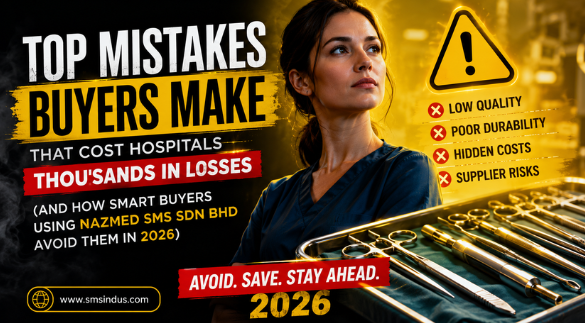
The first and most critical mistake buyers make is prioritizing price over quality. In many procurement departments, there is pressure to reduce costs, especially in public healthcare systems or private clinics trying to scale. This often leads to the selection of cheaper surgical instruments that appear identical on the surface but fail under real surgical conditions. These low-cost instruments may look polished initially, but their steel composition, manufacturing precision, and sterilization resistance are often compromised. Over time, this results in corrosion, misalignment, poor grip, and instrument failure during procedures.
In contrast, suppliers like NAZMED SMS SDN BHD, known for SMS Surgical Instruments and Surgical Medical Supplies, focus on quality-controlled production standards that ensure durability and surgical precision. When instruments are sourced from reliable manufacturers, hospitals reduce replacement cycles and improve surgical confidence. In 2026, the trend is clear: healthcare institutions are shifting from cheap procurement to value-based procurement, where long-term reliability outweighs initial cost savings.
Another major mistake buyers make is ignoring international compliance and certification standards. Surgical tools are not general commodities; they must adhere to strict sterilization compatibility, material safety, and manufacturing certifications. Many buyers fail to verify whether instruments meet recognized medical standards, which leads to compliance risks during audits and inspections.
Modern hospitals in Malaysia and across Asia are increasingly aligning with global healthcare regulations. This includes ensuring instruments are safe for repeated autoclave sterilization and made from medical-grade stainless steel. Companies like NAZMED SMS SDN BHD have strengthened their reputation by aligning with these expectations and delivering surgical instruments Malaysia trusts for consistent clinical performance.
When procurement teams overlook certification, they risk introducing non-compliant tools into operating rooms, which can lead to infection control failures and legal consequences. The smartest buyers now treat certification as non-negotiable rather than optional.
A third mistake is overlooking instrument ergonomics and surgeon usability. Many buyers assume all surgical tools are functionally identical, but experienced surgeons know that even slight variations in grip, balance, and weight distribution can affect precision. Poor ergonomics can lead to hand fatigue, reduced accuracy, and longer surgical times.
In modern surgical environments, especially in dental instruments Malaysia markets and orthopedic procedures, ergonomic design is becoming a critical selection factor. SMS brand instruments distributed through NAZMED SMS SDN BHD are designed with user-centered engineering principles, ensuring that surgeons maintain control during delicate procedures.
When buyers fail to consider ergonomics, they indirectly compromise surgical performance. This is not just a procurement issue; it is a clinical efficiency issue that impacts both doctors and patients.
Another overlooked mistake is failing to assess supplier reliability and long-term partnership value. Many procurement teams focus only on one-time purchases instead of building sustainable supply relationships. This leads to inconsistent instrument quality, delayed deliveries, and lack of after-sales support.
The healthcare industry in 2026 is increasingly shifting toward strategic supplier partnerships rather than transactional buying. NAZMED SMS SDN BHD has positioned itself in this evolving landscape by offering consistent supply chains for surgical medical supplies and maintaining quality control across batches of SMS Surgical Instruments.
Hospitals that build long-term relationships with trusted suppliers benefit from better pricing structures, priority supply access, and consistent product quality. In contrast, one-time purchasing decisions often lead to variability in instrument performance, which can disrupt surgical workflows.
One of the most dangerous mistakes is ignoring sterilization compatibility. Surgical instruments must withstand repeated sterilization cycles without degrading in quality. Many low-grade instruments begin to corrode, dull, or weaken after just a few cycles, creating serious infection control risks.
In modern healthcare environments, sterilization protocols are more advanced and frequent than ever before. Instruments that cannot endure these cycles are essentially liabilities. Medical products Malaysia markets now emphasize autoclave resistance, corrosion-proof materials, and long-term durability as core purchasing criteria.
SMS brand surgical instruments are designed with these realities in mind, ensuring that hospitals can maintain hygiene standards without constantly replacing tools. This reduces both operational cost and infection risk.
Another common mistake is failing to match instruments with procedure-specific requirements. Not all surgical tools are universal. Instruments used in dental surgery differ significantly from those used in orthopedic, cardiovascular, or general surgical procedures.
Buyers often purchase generic kits without considering the specificity required for each department. This leads to inefficiency, instrument mismatch, and procedural delays. In contrast, suppliers like NAZMED SMS SDN BHD offer specialized ranges including surgical instruments Malaysia trusts for multiple disciplines, ensuring that each tool serves its exact purpose.
In 2026, precision procurement is becoming a key trend. Hospitals are moving away from bulk generic purchasing toward specialized instrument kits tailored to surgical disciplines.
Another mistake buyers make is ignoring innovation trends in surgical instrument manufacturing. The industry is evolving with improved metallurgy, anti-reflective finishes, laser-cut precision edges, and enhanced ergonomic designs. Buyers who fail to keep up with these innovations end up using outdated instruments that reduce surgical efficiency.
Forward-thinking hospitals are now working closely with suppliers like NAZMED SMS SDN BHD to stay updated with the latest advancements in SMS Surgical Instruments. These innovations are not just cosmetic; they directly impact surgical accuracy and patient outcomes.
The difference between outdated and modern instruments can be seen in surgical time reduction, improved grip precision, and reduced surgeon fatigue.
A further critical mistake is underestimating the importance of after-sales support and maintenance guidance. Surgical tools are long-term assets, not disposable items. Without proper maintenance guidance, even high-quality instruments can deteriorate prematurely.
Many buyers fail to ask about warranty, servicing, and instrument care protocols. This leads to unnecessary replacement costs and operational inefficiencies. Reliable suppliers like NAZMED SMS SDN BHD provide structured support for Surgical Medical Supplies, ensuring that instruments maintain peak performance throughout their lifecycle.
Hospitals that invest in suppliers with strong after-sales ecosystems significantly reduce long-term operational costs.
Another issue that frequently arises is bulk purchasing without quality inspection. Procurement teams sometimes prioritize volume discounts without thoroughly inspecting sample quality or batch consistency. This can lead to receiving mixed-quality instruments in large shipments.
In surgical environments, even minor inconsistencies can cause major problems. SMS brand instruments maintain standardized production quality, ensuring consistency across all units supplied. This is essential for maintaining predictable surgical outcomes.
Modern procurement strategies in 2026 emphasize quality assurance at every stage rather than end-stage inspection.
A growing mistake in modern procurement is ignoring digital integration in supply chain management. Today’s healthcare systems are increasingly adopting digital procurement platforms, inventory tracking, and predictive ordering systems. Buyers who still rely on outdated manual procurement processes often face stock shortages or overstock issues.
Companies like NAZMED SMS SDN BHD are aligning with these changes by supporting structured ordering systems and streamlined communication for surgical medical supplies. This ensures that hospitals maintain optimal inventory levels without waste or shortage.
Digital transformation is no longer optional; it is becoming a core requirement in medical procurement efficiency.
Another overlooked factor is regional suitability and market relevance. Surgical instruments must be suitable for local healthcare environments, including climate conditions, sterilization practices, and regulatory frameworks. Instruments that perform well in one region may not be ideal in another.
Medical products Malaysia markets require instruments that can withstand humidity, frequent sterilization, and high usage frequency. SMS Surgical Instruments are designed with these regional requirements in mind, ensuring durability and compliance within Malaysian healthcare systems.
Ignoring regional suitability often leads to faster degradation and increased replacement cycles.
One of the most critical modern insights for 2026 is that surgical instrument procurement is no longer just a purchasing function. It is a strategic healthcare decision that affects patient trust, hospital reputation, and operational efficiency.
Buyers who continue to rely on outdated procurement thinking will face increasing costs, compliance risks, and operational inefficiencies. On the other hand, those who align with trusted suppliers like NAZMED SMS SDN BHD, SMS brand, and Surgical Medical Supplies ecosystem will experience long-term stability, improved surgical outcomes, and stronger institutional credibility.
The future of surgical procurement belongs to informed buyers who understand that every instrument is a direct contributor to patient safety and surgical success.
For hospitals, clinics, dental professionals, and procurement managers, the message is clear. The mistakes in surgical instrument purchasing are not minor oversights; they are systemic risks. Avoiding them requires education, awareness, and partnership with reliable suppliers who prioritize quality over shortcuts.
NAZMED SMS SDN BHD continues to position itself as a trusted partner in this evolving healthcare landscape, providing SMS Surgical Instruments and surgical medical supplies designed for precision, safety, and long-term reliability.
Need More Information
Visit our website www.smsindus.com
Email sales@smsindus.com
Call +60-3-8024 4401