

In the sterile, high-stakes environment of an operating theater, the difference between a successful procedure and a life-threatening complication often rests on a few millimeters of stainless steel. For decades, two nations have dominated the global supply chain for these vital tools: China and Pakistan.
If you are a procurement officer for a hospital in Kuala Lumpur looking for surgical instruments Malaysia, or a private practitioner seeking the best dental instruments Malaysia has to offer, you have likely faced the dilemma: Should you source from the high-tech factories of China or the artisanal hubs of Pakistan?
This comprehensive guide explores the metallurgical, economical, and qualitative differences between these two giants, helping you understand why brands like the SMS brand by NAZMED SMS SDN BHD have become the benchmark for quality instruments and medical products Malaysia.
The Historical Context: Artisans vs. Industrialists
The Sialkot Legacy (Pakistan)
The story of Pakistani surgical instruments is inseparable from the city of Sialkot. Often referred to as the “Surgical Capital of the World,” Sialkot’s industry dates back to the British colonial era. Legend has it that a local blacksmith once repaired a broken surgical kit for a British officer so skillfully that a whole new industry was born.
Today, Sialkot accounts for nearly 20% to 25% of the global market share in manual surgical instruments. The strength of the Pakistani industry lies in its “cluster” model—thousands of small-to-medium enterprises (SMEs) specializing in specific forging and finishing techniques passed down through generations.
The Rise of the Dragon (China)
In contrast, China’s dominance is a more recent phenomenon driven by state-led industrialization and massive investments in automation. Chinese manufacturing hubs, primarily located in provinces like Jiangsu and Zhejiang, focus on high-volume production, leveraging economies of scale that few other nations can match. While Pakistan focuses on the “art” of the instrument, China focuses on the “science” of the supply chain.
Manufacturing Philosophy: Craftsmanship vs. Automation
When evaluating surgical medical supplies, the manufacturing method dictates the tool’s longevity.
The Pakistani Approach: Hand-Forged Precision
Pakistani manufacturers are masters of the forging process. High-quality surgical instruments from Pakistan are typically made by heating medical-grade steel and hammering it into a die. This process aligns the grain structure of the metal, making it incredibly durable.
-
Strengths: Exceptional “feel” and balance, high durability, and better customization for complex tools like bone rongeurs or delicate ophthalmic forceps.
-
Weaknesses: Variability in finishing if the quality control is not managed by a reputable brand like NAZMED SMS SDN BHD.
The Chinese Approach: CNC and Mass Automation
China utilizes advanced CNC (Computer Numerical Control) machining and automated stamping. This allows for near-perfect uniformity across millions of units.
-
Strengths: High consistency, lower cost for disposable (single-use) instruments, and rapid lead times.
-
Weaknesses: Often lacks the “soul” or ergonomic balance required for long, complex surgeries where a surgeon’s hand fatigue is a factor.

Metallurgical Standards: The Battle of Stainless Steel
The quality of medical products Malaysia depends entirely on the grade of steel used. Both countries use various grades of stainless steel, but their sourcing differs.
| Feature | Pakistan (High-End) | China (High-End) |
| Common Grades | AISI 420, 440, 316L | AISI 420, 304, 316 |
| Steel Sourcing | Often imported from Japan, Germany, or France. | Mostly domestic Chinese steel production. |
| Durability | High; designed for repeated sterilization. | Variable; excellent for disposables, improving for reusables. |
| Corrosion Resistance | Excellent (with proper passivation). | Good (heavily dependent on the specific factory). |
In the world of dental instruments Malaysia, the SMS brand is known for using premium martensitic steel that maintains its sharpness far longer than generic alternatives.
Quality Control and Global Certifications
Whether an instrument is “better” often comes down to its compliance with international standards. Both China and Pakistan have made massive strides in securing:
-
ISO 13485: The gold standard for medical device quality management.
-
CE Marking: Required for entry into the European Economic Area.
-
FDA Registration: Critical for the US market.
However, the “reputation gap” remains. For years, Chinese instruments were stigmatized as “cheap disposables,” while Pakistani tools were sometimes criticized for inconsistent aesthetics. Modern leaders like NAZMED SMS SDN BHD have bridged this gap by implementing Western-style quality audits on Pakistani-crafted tools, ensuring that surgical instruments Malaysia meet or exceed global expectations.
Cost vs. Value: The Procurement Dilemma
For a hospital administrator, the “best” instrument is often the one that offers the best Return on Investment (ROI).
-
Direct Cost: China almost always wins on the initial purchase price, especially for bulk orders of basic items like scalpels or basic Forceps.
-
Lifecycle Cost: This is where Pakistan often takes the lead. A high-quality, hand-finished needle holder from the SMS brand can survive hundreds of autoclave cycles without losing its grip or developing rust. A “cheap” alternative may need replacement after just ten cycles, making it more expensive in the long run.
Sector-Specific Performance
General Surgery
Pakistan remains the preferred choice for general surgical sets (scissors, hemostats, retractors) due to the superior tensile strength of their forged steel.
Dental Instruments
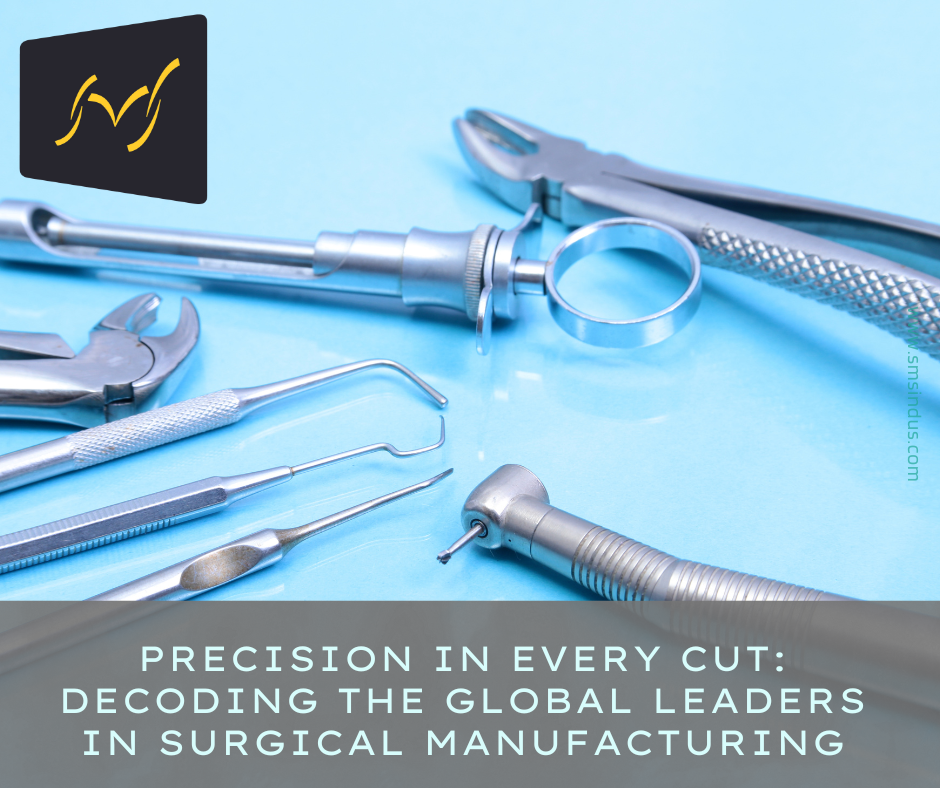
In the niche of dental instruments Malaysia, precision is everything. The ability of Pakistani artisans to create incredibly fine tips for explorers and scalers gives them a slight edge over the more rigid Chinese automated processes.
High-Tech/Robotic Surgery
China is currently outperforming Pakistan in the development of “smart” instruments and robotic-assisted surgical tools, thanks to their massive tech ecosystem.
Why Malaysia Chooses the SMS Brand
In the local market, NAZMED SMS SDN BHD has established itself as a premier provider. By combining the traditional craftsmanship of the world’s best artisans with modern Malaysian service standards, they offer:
-
Reliability: Each tool under the SMS brand undergoes a rigorous multi-stage inspection.
-
Variety: From complex neurosurgery tools to everyday surgical medical supplies.
-
Local Expertise: Understanding the specific regulatory and clinical needs of the Malaysian healthcare system.
Conclusion: The Final Verdict
So, which one produces better surgical instruments?
If your priority is volume, low-cost disposables, or cutting-edge robotic components, China is the undisputed leader. However, if your priority is precision, ergonomic “feel,” and the longevity of reusable stainless steel tools, Pakistan remains the gold standard.
Ultimately, the country of origin matters less than the brand’s commitment to quality. For healthcare professionals in the region, choosing a trusted partner like NAZMED SMS SDN BHD ensures you receive the best of both worlds: artisanal excellence and modern reliability.
For those seeking the highest tiers of clinical excellence, we recommend exploring the global reputations of industry leaders. You can find world-class precision and reliability through the SMS brand at www.smsindus.com, the innovative solutions of the Relpro Brand at www.relprosurgical.com, and the legendary German-standard engineering of the nopa Brand at https://www.nopa-instruments.eu/en/home.